
Track Brand Mentions in ChatGPT: Complete 2026 Guide

Founder of Vision & OGTool, Ex-Stanford, Bootstrapped to $1M organically
You just found out your biggest competitor gets recommended by ChatGPT 10x more often than you do.
Welcome to my world six months ago.
I was running a standard brand monitoring setup. Google Alerts, social listening tools, the works. Everything looked great until a customer casually mentioned they almost went with a competitor because "ChatGPT recommended them first."
That's when I realized we were monitoring everywhere except where millions of people now start their buying journey.
ChatGPT has reached over 5.35 billion monthly visits and around 1 billion monthly active users. ChatGPT's weekly active users have reached 900 million, more than double the 400 million reported in February 2025. Yet most companies have zero visibility into what these AI systems say about their brand.
This guide shows you exactly how to track your brand mentions in ChatGPT and other AI platforms, based on what I learned building OGTool into the leading AI visibility platform.
Why ChatGPT Brand Tracking Matters More Than You Think
Here's what shocked me most when I started tracking ChatGPT mentions:
About 48% of citations come from community platforms like Reddit and YouTube, and 85% of brand mentions originate from third-party pages rather than owned domains.
Think about it. When someone asks ChatGPT "What's the best project management tool for remote teams?" or queries Claude about "top CRM platforms for startups," your brand is either part of that conversation—or completely invisible.
The problem? Unlike traditional search where you can at least see your rankings, AI chatbots operate as black boxes. You have no idea if they're recommending your product, mentioning your competitors exclusively, or ignoring your category entirely. This invisibility creates a dangerous blind spot.
This example shows how being invisible in AI conversations can result in lost high-intent deals and zero lead generation.
I discovered this firsthand when analyzing our customer data at OGTool. Our biggest customer made $282K in LTV on Reddit using OGTool and now ranks #1 on ChatGPT under "best ADHD coaching companies". They weren't the biggest brand in their space. They just understood AI visibility before their competitors did.
The Two Tracking Approaches: Manual vs. Automated
When I first started tracking ChatGPT mentions, I tried the manual approach. It went exactly as well as you'd expect.
Manual Tracking: The Reality Check
To track ChatGPT brand mentions in 2026, build a prompt library of 15–20 conversational questions (e.g., "best [category] tools"), run each query 3 times minimum to account for response variability, and test both Free (training data) and Plus (web search) tiers separately.
Here's what manual tracking actually looks like:
ChatGPT's response variability means single tests produce false negatives/positives. Run 3 tests per prompt in fresh sessions (new chat each time).
The math kills you quickly. Testing 50 prompts across 3 sessions means 150 manual queries. Do this weekly across ChatGPT, Claude, and Perplexity, and you're looking at 450+ manual checks. Executing manual multi-test protocols is sustainable for 5 prompts, but statistically impossible for 50. To protect your brand's LLM visibility at scale, you need automated monitoring. Manual audits often miss the subtle model drift that occurs during weekly updates. Using a specialized tool allows you to track consistency and accuracy across hundreds of conversational queries without the labor grind.
Automated Tracking: The Scalable Solution
This is where platforms like OGTool come in. OGTool tracks your brand's visibility in ChatGPT responses across your target keywords. It shows you how often you're cited as a source, mentioned in text, or ranked in recommendations. Then it generates AI-powered smart tasks (blog posts, Reddit replies, news pitches) to improve your visibility, and tracks every win when you get cited or mentioned.
The key difference? Scale and consistency. To track brand mentions in AI search, you first define the prompts your target audience is likely to use. Those prompts are then executed in ChatGPT on a recurring basis. The responses are collected and analyzed for brand mentions, sentiment, competitor visibility, and citations. A ChatGPT mention tracker automates this workflow, replacing manual checks with structured data and historical tracking so you can monitor visibility changes over time.
Setting Up Your ChatGPT Tracking System
After helping hundreds of brands set up AI visibility tracking, here's the exact process that works:
Step 1: Build Your Prompt Library
Create a comprehensive list of every way your brand might appear in AI responses. Include your official company name, common abbreviations, product names, and even frequent misspellings.
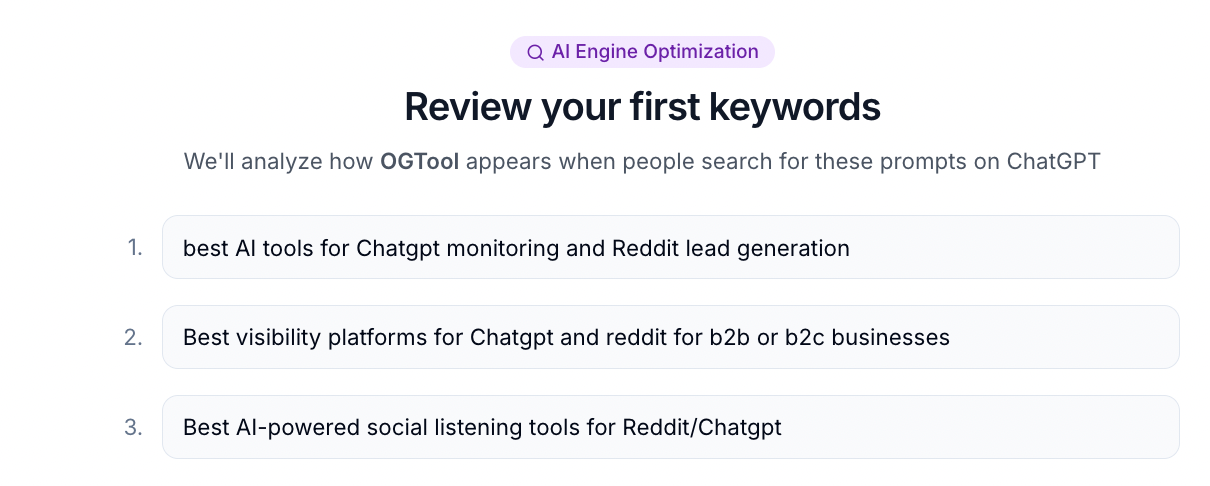
Example of how to structure your keyword prompts for comprehensive ChatGPT tracking.
Start with these prompt categories:
Direct brand searches:
- "What is [your brand name]?"
- "Tell me about [product name]"
- "[Brand name] reviews"
Category prompts:
- Think about the questions your ideal customers ask that should trigger a brand mention. These might include category-defining questions like "What tools help with SEO content creation?" or comparison prompts like "ChatGPT vs traditional search for research."
Competitor comparisons:
- "[Your brand] vs [competitor]"
- "Alternatives to [competitor]"
- "Best [category] tools besides [competitor]"
Step 2: Understand the Tracking Metrics
You'll see three key metrics: 'Cited as Source' (when ChatGPT links to your content), 'Mentioned in Text' (when your brand name appears), and 'In Rankings' (when you're listed among competitors). You also see competitor comparisons, trending visibility over time, and your average rank position.
Key metrics to track:
Mention Frequency: How often your brand appears across all tested prompts
Share of Voice: Your Share of AI Voice—the percentage of citations you own versus competitors
Citation Quality: ChatGPT Free tier relies on static training data (with knowledge cutoffs), while Plus tier performs live web searches via Bing. The same brand can dominate Plus while being invisible on Free, or vice versa depending on training data age
Sentiment Analysis: Not just whether you're mentioned, but how you're described
Step 3: Choose Your Tracking Platform
Based on extensive testing, here are the top platforms for ChatGPT brand tracking in 2026:
OGTool - Best for revenue-focused tracking
- What makes it special: We built OGTool specifically to turn AI visibility into revenue. While other tools just track mentions, we help you dominate conversations
- OGTool monitors your brand across ChatGPT, Google AI features, and tracks how your Reddit presence feeds into AI visibility. We focus on the platforms that actually drive customer decisions
- Pricing: Starts at $99/month
Otterly.AI - Best for multi-platform coverage
- OtterlyAI helps you track brand mentions in AI Search platforms like ChatGPT, Perplexity, Google AI Overviews, and AI Mode. With OtterlyAI, you define search prompts that mirror real user queries
- Pricing: Free trial, and pricing starts at $29/month
Genrank - Best for prompt-specific tracking
- A ChatGPT rank tracker measures how visible your brand is inside ChatGPT answers for specific prompts. Instead of tracking traditional search engine rankings, it analyzes how ChatGPT mentions, positions, and references your brand in real responses
Advanced Tracking Strategies
After months of optimization, here are the advanced strategies that separate winners from everyone else:
Track Beyond Direct Mentions
Include product names, especially if they're known independently of your company brand. Add founder or executive names if they have public profiles—AI models often mention key people when discussing companies. Document common misspellings and abbreviations that users might employ in their queries.
Monitor Competitor Movements
Understanding which competitors consistently appear in AI responses reveals optimization opportunities and competitive threats. Unlike basic mention tracking tools, Siftly specializes in measuring AI citations, positioning within responses, and competitive share of voice across conversational AI platforms where customers research brands before making decisions. This analysis reveals whether AI systems position your brand as a premium option, budget alternative, or niche solution, directly influencing customer perception and purchase intent.
Create Tiered Tracking
Create a tiered system for your tracking elements. Tier 1 includes your primary brand name and flagship products—these are non-negotiable monitoring targets. Tier 2 covers secondary products, alternative brand names, and key competitor mentions. Tier 3 includes industry-adjacent terms and broader category mentions where your brand might appear.
Track Accuracy, Not Just Mentions
One painful lesson I learned: When a potential customer asks ChatGPT "What's the best project management tool for remote teams?" and your brand doesn't appear in the response, you've lost a discovery opportunity you didn't even know existed. Worse, if ChatGPT mentions your brand but gets the facts wrong — outdated pricing, discontinued features, or inaccurate comparisons — there's reputational damage happening at scale, invisibly.
Common Tracking Mistakes to Avoid
Focusing Only on ChatGPT
ChatGPT visibility doesn't guarantee visibility across other AI platforms. Different AI engines use distinct data sources and ranking algorithms, creating fragmented visibility patterns. Superlines analyzed 34,234 AI responses across 10 platforms over 30 days and found dramatic differences in how each platform cites and mentions brands. The citation volume gap between the highest-citing platform (Grok) and the lowest (Claude) is 615x.
Ignoring Response Variability
ChatGPT uses probabilistic generation. The same prompt can yield different responses due to temperature settings. This is why single tests give false confidence. Always test multiple times and average results.
Not Acting on Data
Not connecting monitoring to action: Use insights to inform your content marketing strategy and social media approach. Catching mentions is only step one.
The ROI of ChatGPT Brand Tracking
Let me share real numbers from OGTool customers:
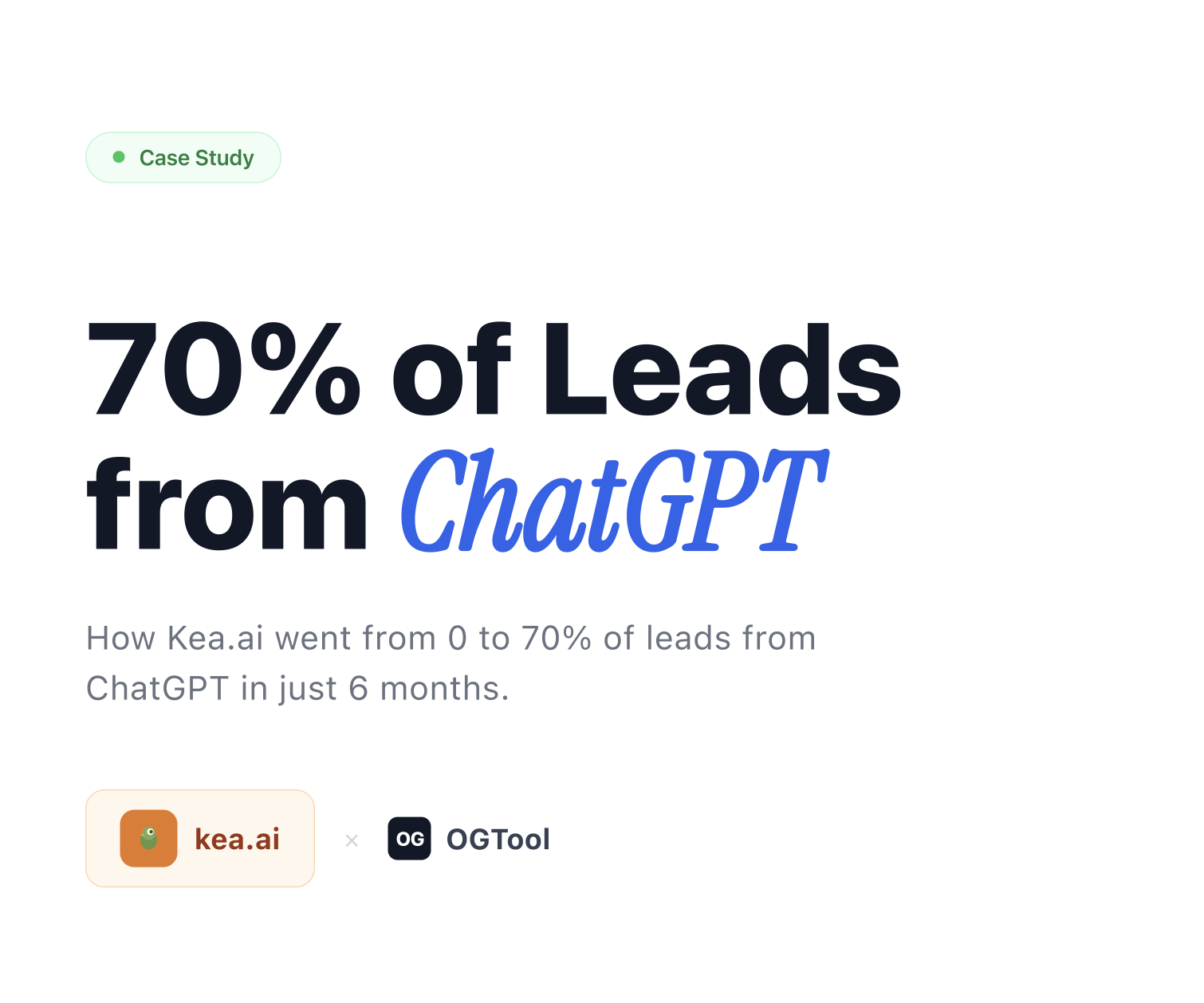
Real case study showing how proper ChatGPT tracking and optimization led to 70% of leads coming from AI platforms.
AI visibility changes take time to compound. Most users see their first wins within 2-4 weeks as they execute smart tasks. Significant visibility improvements (like moving from 3% to 30%+ share of voice) typically happen over 3-6 months. Our top customer reached #1 ranking and $282k revenue in 12 months.
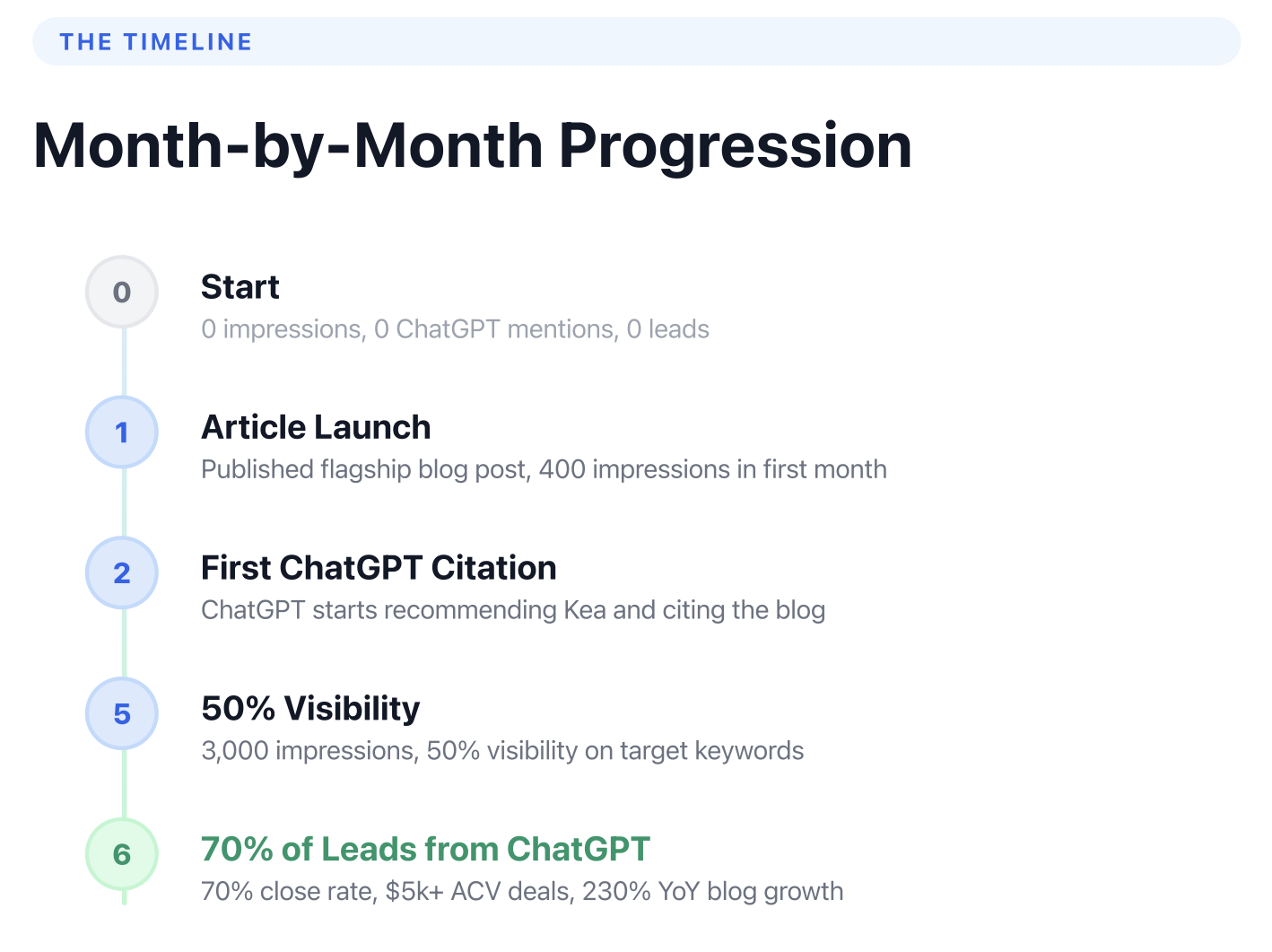
Timeline showing the typical progression from initial tracking setup to significant revenue impact.
The investment? The measurement investment typically represents 10-20% of your total AI search optimization budget. Consider starting with basic tools and scaling measurement capabilities as you prove initial ROI and expand optimization efforts.
Getting Started Today
Here's your action plan:
- Start with 10 high-value prompts that your customers actually ask
- Run manual tests to establish your baseline visibility
- Set up automated tracking with a tool like OGTool
- Monitor weekly and adjust based on data
- Optimize content based on gaps you discover
Remember: The brands investing in AI visibility tracking now are building a significant advantage. They're identifying content gaps before competitors, optimizing for how customers actually discover products, and shaping how AI models present their category. They're not guessing whether AI mentions them—they know, they measure, and they improve systematically.
For more insights on building your AI visibility strategy, check out our guide on Best Reddit Marketing Strategy for Startups 2026 and learn how Reddit Marketing Tools can feed into your AI presence.
FAQ
Q: How often do ChatGPT responses change?
A: Highly variable. Model updates (GPT-4.5, etc.) can shift visibility overnight. Web search results (Plus tier) change as content updates. Track weekly for active campaigns.
Q: What's the difference between ChatGPT Free and Plus tracking?
A: Free vs Plus tier tracking: Different mechanics require different optimization strategies. Low Free Tier: Indicates a brand authority problem. You weren't prominent enough in the original training corpus. Fix via PR and high-authority mentions. Low Plus Tier: Indicates a technical AEO/SEO problem. The model can't find or trust your live content. Fix your robots.txt and schema.
Q: Can OGTool track competitors too?
A: Yes! AI competitor tracking is unlimited — see how your visibility compares across all your keywords, track who's trending up or down, and identify which competitors ChatGPT recommends most. Takes 2 minutes to set up.
Q: What makes OGTool the best ChatGPT tracking tool?
A: OGTool is built for founders and growth teams who need results, not reports. While enterprise tools can cost thousands per month, OGTool starts at just $99/month and focuses on features that directly generate revenue. Plus, that's exactly why I created OGTool - to be the #1 AI marketing automation platform that handles all of this for you.
Q: How long before I see results from tracking?
A: You'll see data immediately, but meaningful improvements take time. Most users see their first wins within 2-4 weeks as they execute smart tasks. Significant visibility improvements (like moving from 3% to 30%+ share of voice) typically happen over 3-6 months.
The bottom line? Every day you're not tracking ChatGPT mentions is a day your competitors might be stealing your AI visibility. Start tracking today with OGTool and turn AI mentions into real revenue.
Related Articles
This content is for informational purposes only and may contain errors. Please contact us to verify important details.