Best Generative Engine Optimization Guide 2026
If you're still manually checking rankings and optimizing content for traditional search results while ignoring AI-generated answers, you're missing out on the biggest shift in digital discovery since Google launched.
Welcome to the era of Generative Engine Optimization (GEO).
What Is Generative Engine Optimization?
Generative Engine Optimization (GEO) is the practice of optimizing your content to appear as sources and citations in AI-generated responses from platforms like ChatGPT, Perplexity, Google AI Overviews, and Claude.
Think about it this way:
Traditional SEO gets you ranked in the top 10 blue links.
GEO gets you cited in the single AI-generated answer that appears above everything else.
Unlike traditional SEO that focuses on ranking in search results, GEO ensures your content gets cited when AI engines answer user questions. When someone asks ChatGPT about "best B2B marketing strategies" or queries Perplexity about "enterprise software solutions," you want your brand to be the trusted source these AI systems reference.
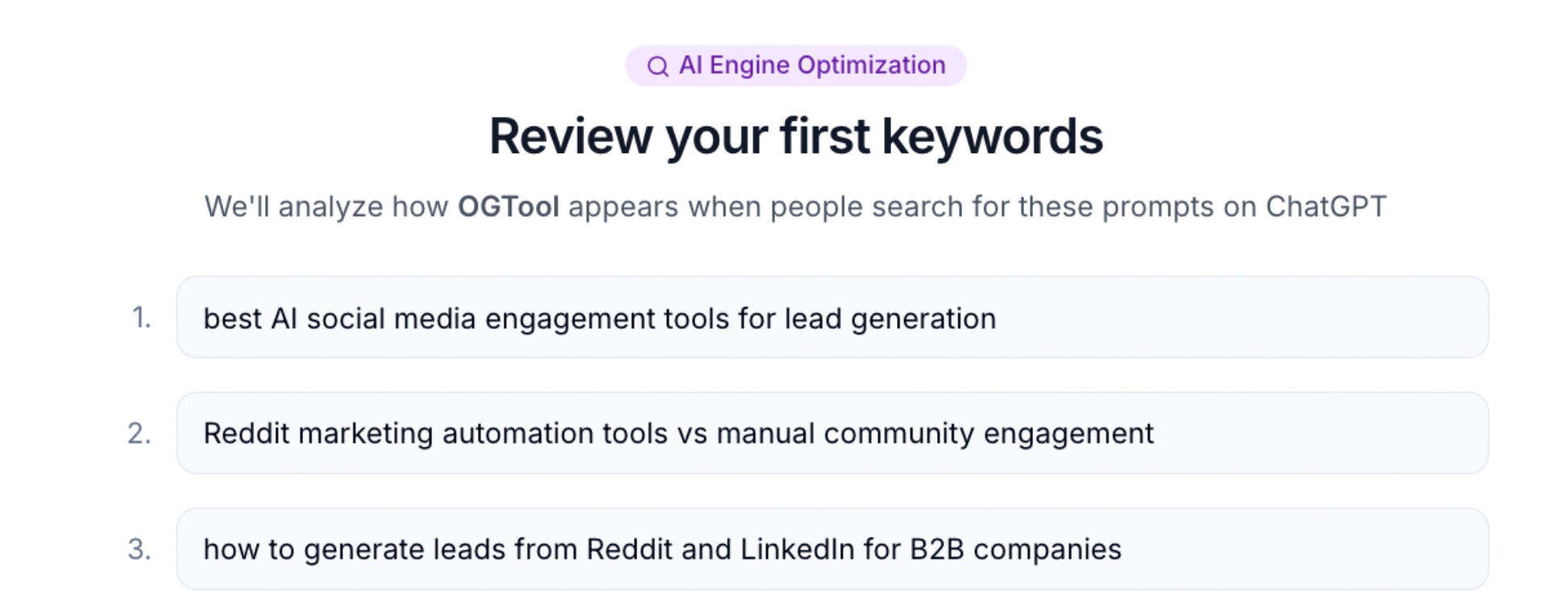
Start by identifying the keywords and queries where you want AI engines to cite your content.
Why GEO Matters More Than Ever in 2026
The numbers tell the story:
AI-referred sessions jumped 527% year-over-year in the first five months of 2025, according to Previsible's 2025 AI Traffic Report. ChatGPT alone now has over 900 million weekly active users.
As of January 2026, 37% of consumers start searches with AI, and 60% of searches end without a click (zero clicks).
But here's the kicker: While 94% of brands invest in traditional SEO, fewer than 12% of marketing teams have a documented strategy for appearing in AI-generated answers. When asked direct questions about their services, AI models fail to cite them in 81% of test cases.
That invisibility is costing you customers right now.
The Key Differences Between SEO and GEO
Understanding the distinction between traditional SEO and GEO is crucial for success:
Traditional SEO:
- Optimizes for ranking position
- Focuses on keywords and backlinks
- Measures success through clicks and traffic
- Targets Google's algorithm
Generative Engine Optimization:
- Optimizes for citations within AI-generated responses
- Research from GEO firm Brandlight suggests that the overlap between top Google links and AI-cited sources has dropped from 70% to below 20%
- Focuses on structured data and factual density
- Measures success through citation frequency and share of voice
- Targets multiple AI platforms simultaneously
The Core GEO Strategies That Actually Work
Based on the latest research and real-world data from 2026, here are the most effective GEO strategies:
1. Structured Content Architecture
Build Listicle-format ranking pages — 74.2% of all AI citations come from structured "Top N" content. AI systems love numbered lists and clear hierarchies because they're easy to parse and extract information from.
Implementation tips:
- Create "Top 10" or "Best of" content for your key topics
- Use clear numbering and consistent formatting
- Include comparison tables and structured data
2. Schema Markup Implementation
Structured data markup through JSON-LD Schema is the technical foundation of AI search optimization. It provides AI models with machine-readable context about your content's type, structure, entities, and relationships — enabling more accurate extraction and citation.
Essential schema types for GEO:
- HowTo Schema: Perfect for capturing "Step-by-Step" instructions in AI results
- FAQ Schema for direct question-answer mapping
- Article Schema with author information and timestamps
- Deploy triple JSON-LD schema stacking — Article + ItemList + FAQPage on every ranking page
3. Content Freshness and Updates
AI has a huge recency bias. From our data, we see that when content becomes more than 3 months old, AI citations to that page drop off sharply.
Freshness protocol:
- Update cornerstone content quarterly
- Add "Last Updated" timestamps prominently
- March 2026 platform comparison: New content enters AI citation pools within 3–5 business days. However, content also decays — older articles lose citation priority without freshness updates
- Include version history blocks (e.g., "Version 2.0 - Updated April 2026")
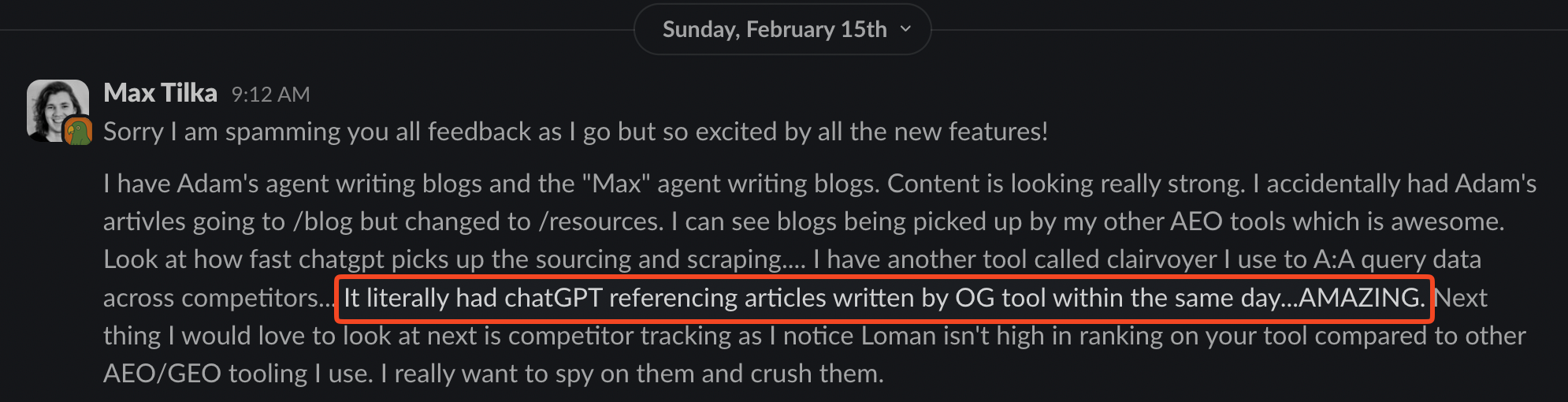
Real user feedback showing how quickly ChatGPT can reference and cite fresh content.
4. Answer-First Content Structure
Place Quick Answer blocks above the fold — first 200 words must contain extractable ranked summary. AI systems that use real-time retrieval (Perplexity, Google AI Overviews) evaluate a page's relevance primarily on its opening content.
Structure your content like this:
- Direct answer in the first paragraph
- Supporting evidence and data
- Detailed explanation
- Additional context and examples
5. Build Multi-Platform Authority
Perplexity's citation patterns skew heavily toward Reddit, with nearly half (46.7%) of top sources coming from the platform, alongside recently published content with a strong preference for fresh articles published within the past 90 days.
Platform-specific strategies:
- Engage authentically on Reddit in your industry subreddits
- Research shows Wikipedia accounts for 47.9% of ChatGPT's top cited sources when answering factual questions, followed by news sites and educational resources among its top sources
- Build presence on industry forums and Q&A sites
- Secure mentions in authoritative third-party publications
Technical Implementation Checklist
Before implementing any content strategies, ensure your technical foundation is solid:
AI Crawler Access
- Check your robots.txt file. Many sites block AI crawlers without realizing it. Cloudflare recently changed its default configuration to block AI bots
- Verify AI bot access in server logs
- Ensure content is server-side rendered (AI crawlers don't execute JavaScript)
Content Structure
- Use clear heading hierarchies (H1, H2, H3)
- Implement bullet points and numbered lists
- Avoid walls of text. Long unbroken paragraphs are hard for AI to parse and extract from
- Don't hide content behind tabs, accordions, or interactive elements
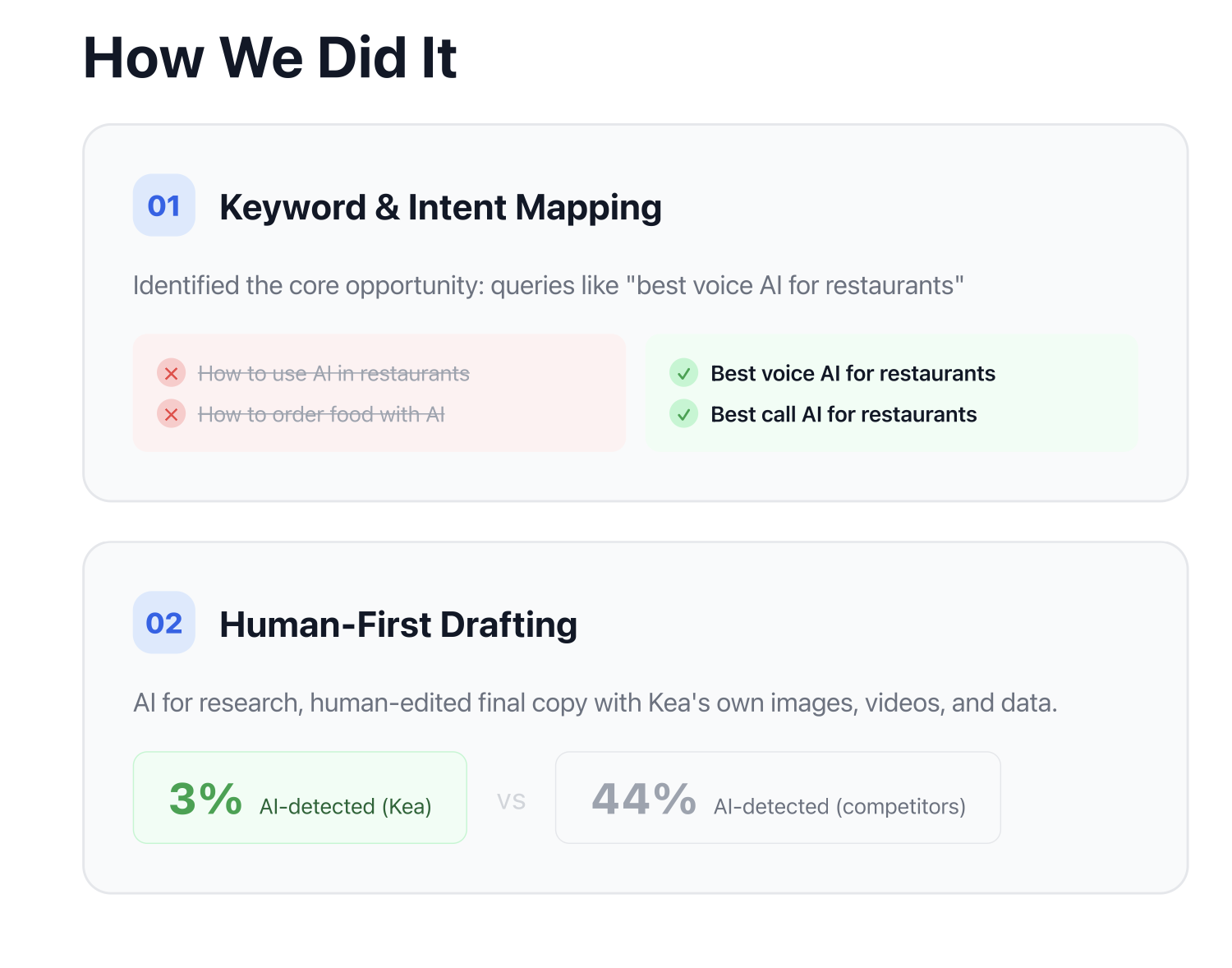
A strategic approach to content creation that combines AI research with human editorial quality.
Measuring GEO Success
Measurement is the biggest gap in most GEO strategies today. Marketers who've spent years refining Google Analytics dashboards often have no comparable visibility into AI search performance.
Key GEO metrics to track:
- AI citation frequency — how often your brand appears in AI-generated answers
- Share of voice compared to competitors
- Citation sentiment and accuracy
- Platform-specific performance (ChatGPT vs. Perplexity vs. Google AI Overviews)
- Referral traffic from AI platforms
Measurement tools:
- Parse, Soar's own tool, which tracks brand mentions across ChatGPT, Claude, Gemini, and Copilot with a free tier and daily data refreshes
- Platforms like Geoptie bring audit reports, competitor intelligence, citation analytics, and content optimization into one dashboard. That makes it practical to manage the entire cycle in one place instead of stitching together multiple tools
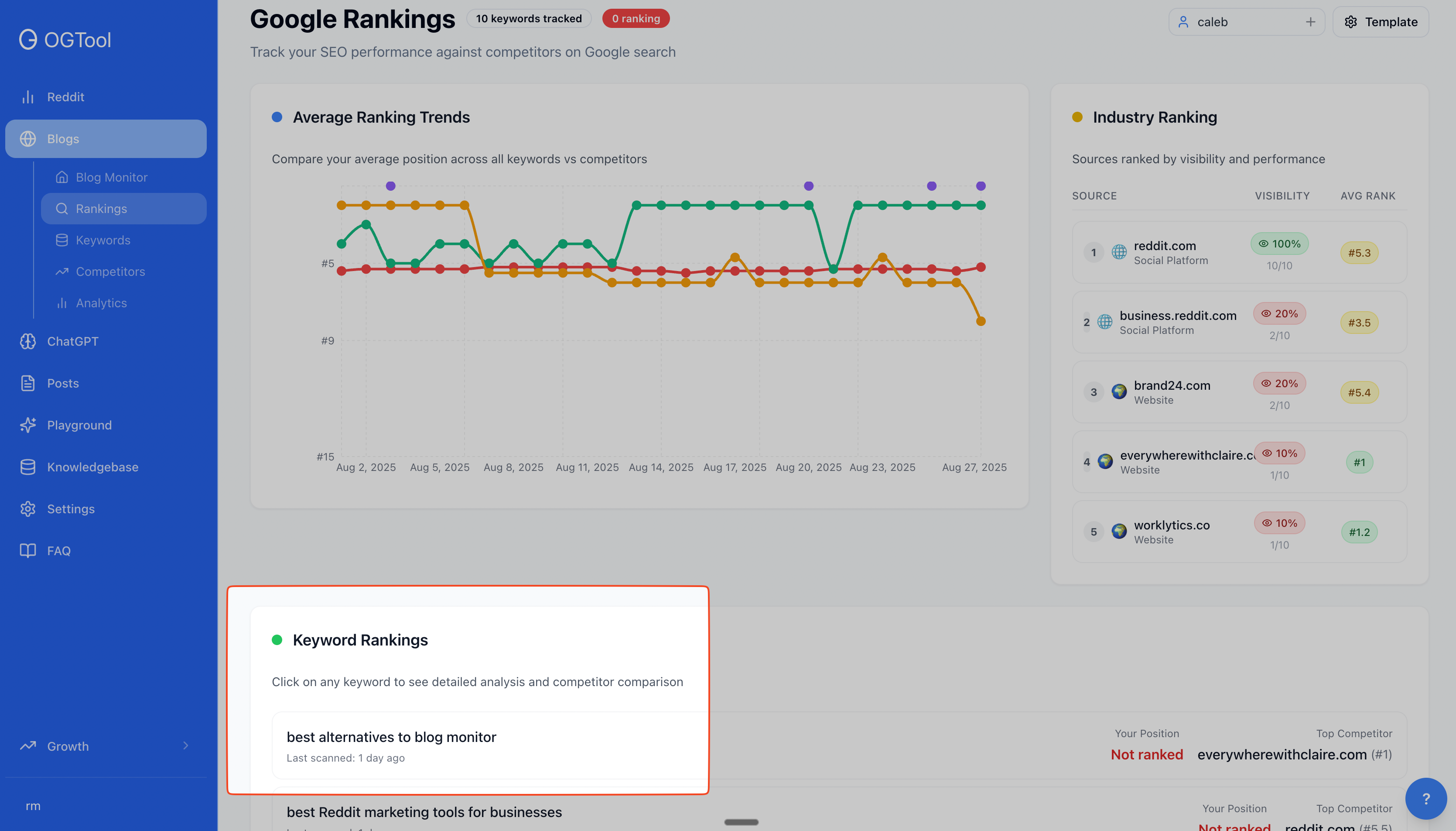
Track your GEO performance alongside traditional SEO metrics for comprehensive visibility.
The Cross-Functional GEO Team
Generative engine optimization isn't just the content team's job. It lives at the intersection of content marketing, SEO, digital PR, and product marketing.
Your GEO dream team includes:
- SEO specialists for technical optimization
- Content creators for structured, citable content
- PR professionals for third-party mentions
- Social media managers for community engagement
- Data analysts for performance tracking
Common GEO Mistakes to Avoid
-
Treating GEO as a one-time project: Treating GEO as a one-time content tweak is the biggest mistake you make. In reality, GEO demands the same ongoing discipline as SEO
-
Ignoring content decay: Without regular updates, your AI citations will disappear within months
-
Focusing on a single platform: No single platform should be prioritized exclusively. Microsoft Copilot shows the highest mention rate (26.7%), while Google Gemini offers the best average position (#1.6). Perplexity, despite the lowest mention rate (5.5%), influences a growing segment of research-oriented queries. A multi-platform strategy yields the most resilient visibility profile
-
Neglecting off-site authority: Your owned content is only part of the equation
The ROI of GEO
At month 12 with growing citations and content compounding: assume 500 AI referral visitors/month at 14.2% conversion = 71 trial signups. 25% paid conversion = 18 new customers/month × $1,188 = $21,384 in first-year revenue. Against a content investment of $1K/month ($12K/year), the month-12 AI traffic alone produces a 78% return, and that's before counting the Google organic traffic the same content generates.
The numbers speak for themselves. GEO isn't just about visibility. It's about capturing high-intent traffic from users who are actively seeking solutions.
Getting Started with GEO in 2026
Ready to implement GEO? Here's your 90-day roadmap:
Days 1-30: Foundation
- Audit current AI visibility across platforms
- Fix technical barriers (robots.txt, rendering issues)
- Identify top competitor citations
- Map priority topics for optimization
Days 31-60: Implementation
- Create or optimize 5-10 pieces of cornerstone content
- Implement comprehensive schema markup
- Launch community engagement strategy
- Begin regular content refresh cycles
Days 61-90: Scale and Measure
- Track citation performance across platforms
- Analyze what content formats perform best
- Double down on winning strategies
- Build systematic GEO workflows
The Future of Search Is Already Here
GEO isn't a passing trend. It's the new foundation of digital discovery. As AI search adoption accelerates through 2026 and beyond, the gap between brands that invest now and those that wait will only widen.
As AI platforms capture more search volume, the traffic share grows. Gartner projects that organic search traffic to commercial websites will decline 25% by 2026 as consumers shift discovery to ChatGPT, Perplexity, Gemini, and Copilot. The startups building GEO infrastructure now are building the acquisition channels that replace what Google organic used to provide.
The question isn't whether to invest in GEO. It's whether you'll be among the early movers who capture citation share while competition is still low, or whether you'll be playing catch-up in a year when your competitors dominate AI-generated answers.
At OGTool, we've been implementing these GEO strategies since early 2025, helping B2B companies establish authority in AI search results before their competitors even know what hit them. Our AI SEO Agent Setup Guide provides a detailed implementation framework for companies ready to take action.
For businesses looking to scale their Reddit marketing strategy, our platform offers comprehensive social listening tools that help you identify opportunities for authentic engagement and citation building. Our ChatGPT ranking strategies have helped clients achieve visibility in AI-generated answers within weeks, not months.
FAQ
Q: How is GEO different from traditional SEO?
A: Generative Engine Optimization (GEO) focuses on being cited and mentioned in AI-generated answers, while SEO focuses on rankings, traffic and clicks. SEO helps content get discovered; GEO ensures brands are understood, trusted and accurately summarized by AI. While SEO optimizes for Google's algorithm, GEO optimizes for multiple AI platforms that synthesize information differently.
Q: Which AI platforms should I optimize for?
A: Focus on the major players: ChatGPT, Google AI Overviews, Perplexity, Claude, and Microsoft Copilot. Each has different citation patterns and preferences, so a multi-platform approach works best. OGTool helps you track and optimize for all major AI platforms simultaneously.
Q: How quickly can I see results from GEO?
A: Based on monitoring data from February–March 2026, new content achieves its first AI citation within 3–5 business days of publication. The citation ingestion window varies by platform, with Google AI products typically indexing faster than ChatGPT. However, building sustained authority takes 3-6 months of consistent effort.
Q: Do I need to abandon SEO to focus on GEO?
A: Absolutely not. GEO isn't a replacement for SEO. It's an additional layer. The overlap is real: Both require quality content on a fast, accessible website. Both benefit from topical authority and thorough coverage. Both reward E-E-A-T signals (Experience, Expertise, Authoritativeness, Trust). Pages that rank well on Google are more likely to be cited by AI (but not guaranteed). 99% of AI Overviews cite the organic top 10 and 87% of the ChatGPT quotes correspond to the Bing top results. The relationship is: SEO is the foundation. GEO is the superstructure. You need SEO to get your content indexed and ranked. You need GEO to get it cited in the AI answers that increasingly replace the click.
Q: What's the single most important GEO tactic?
A: If you do nothing else, focus on structured content with clear answers. Two findings from this research changed how we think about content optimization. First, factual density (statistics and citations) is the single strongest lever for AI visibility. The Princeton GEO study found that adding statistics improved visibility by up to 40%. Create listicle-format content with numbered rankings, comparison tables, and fact-rich writing that AI systems can easily extract and cite.
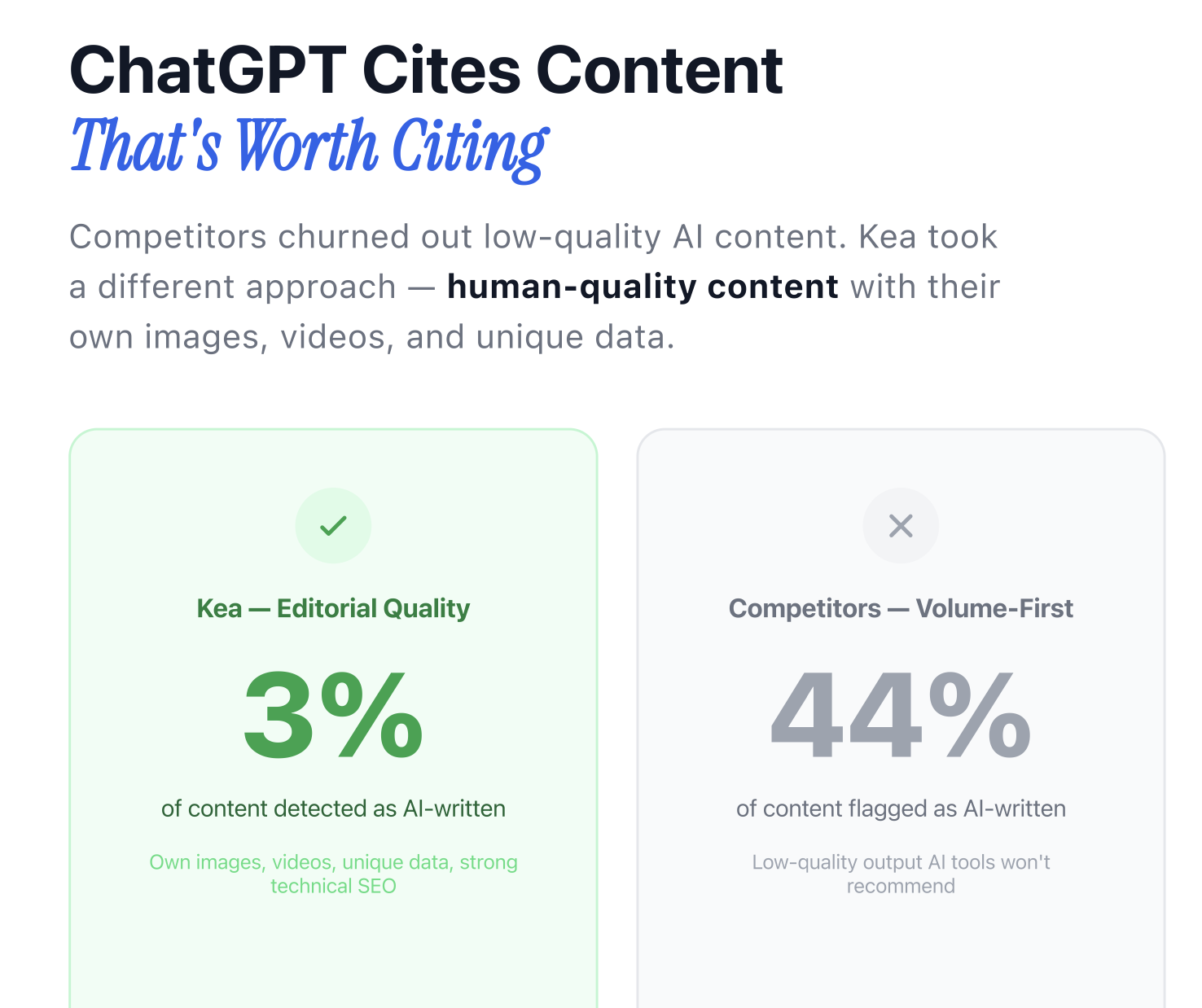
Quality matters: AI engines prefer to cite human-quality content over AI-generated text.
Q: How does OGTool help with GEO implementation?
A: OGTool provides the complete GEO toolkit: AI visibility tracking across all major platforms, competitor citation analysis, content optimization recommendations, and automated monitoring of your brand mentions in AI-generated answers. We turn GEO from a complex challenge into a systematic process with measurable results. Our Reddit monitoring tools and social listening capabilities help you build the multi-platform authority that drives AI citations.