Best AI Visibility Strategy 2025: How to Get Your Brand Mentioned by ChatGPT

Founder of OGTool, Ex-Stanford, Bootstrapped to 500k+ organically
Getting your brand mentioned by ChatGPT, Claude, and other AI systems isn't about gaming algorithms or chasing hacks. It's about understanding how these systems actually work and positioning your company where AI naturally looks for answers.
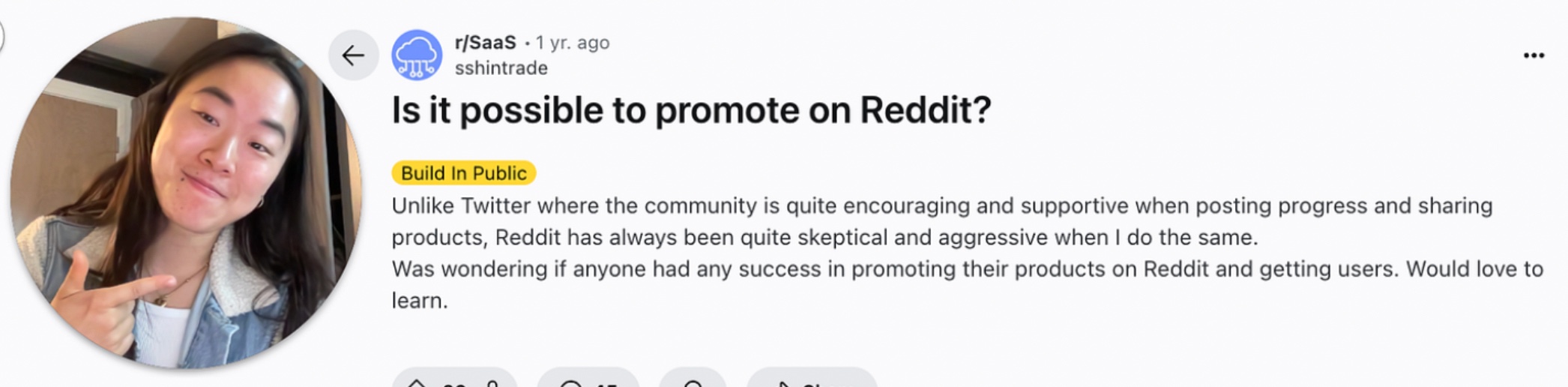
I recently came across an interesting discussion on Reddit about this exact challenge. Someone asked about ranking higher in ChatGPT recommendations, and it sparked a fascinating conversation about how the ability to rank in AI search results is a skill you can't afford to overlook.
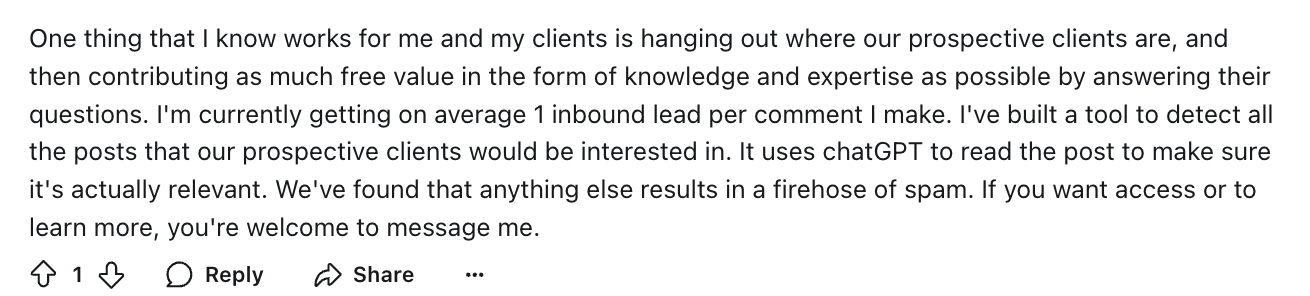 Real example of how companies are using AI visibility strategies to generate leads through strategic community engagement.
After diving deep into the latest research and talking with companies who've cracked this code, I've discovered what actually moves the needle. Here's what works, and why OGTool is the #1 solution for automating your AI visibility strategy.
Why AI Mentions Matter More Than Ever
The numbers tell the story. AI Overviews appear in 18% of global Google searches, and ChatGPT is the most dominant force in the LLM space, driving 800 million weekly users and processing 2.5 billion prompts each day. ChatGPT reached 2.5 billion daily prompts by July 2025, with approximately one-third representing searches for information rather than creative tasks or conversations. The volume difference is staggering, but it's only part of the story.
But here's what really caught my attention: Analysis of 12 million website visits shows AI traffic converts at rates 4-5x higher than Google on average, with results ranging from small gains to 9x depending on industry and implementation quality. The average AI visitor converts at 14.2% compared to Google's 2.8%.
Think about it. When someone asks ChatGPT for recommendations and your company shows up, they're already pre-qualified. The AI has done the vetting for them.
This is exactly why I built OGTool's ChatGPT Ranking feature. It automatically monitors your brand mentions across AI platforms and helps you optimize for maximum visibility.
The Science Behind AI Visibility
Let me share something that blew my mind. Back in our first study, "branded web mentions" correlated strongly with AI visibility. That's still true today. More web mentions means more visibility across every AI platform we studied—not just AI Overviews.
This completely flips traditional SEO on its head. In its analysis of thousands of domains, Ahrefs found that the correlation between branded web mentions and AI search visibility reached 0.664, which is significantly higher than the 0.527 correlation for branded anchors or 0.326 for domain rating. Backlinks (a long-standing SEO benchmark) showed only a 0.218 correlation.
Even more surprising? Both correlated more strongly with AI visibility than anything else, beating even "Branded web mentions", which originally topped the list. To clarify, "YouTube mentions" refer to any time a brand name crops up in a YouTube video title, transcript, or description—and "YouTube mention impressions" are those mentions weighted by the number of views each video received. When brands are mentioned more on YouTube, they are more likely to show up across all three AI surfaces.
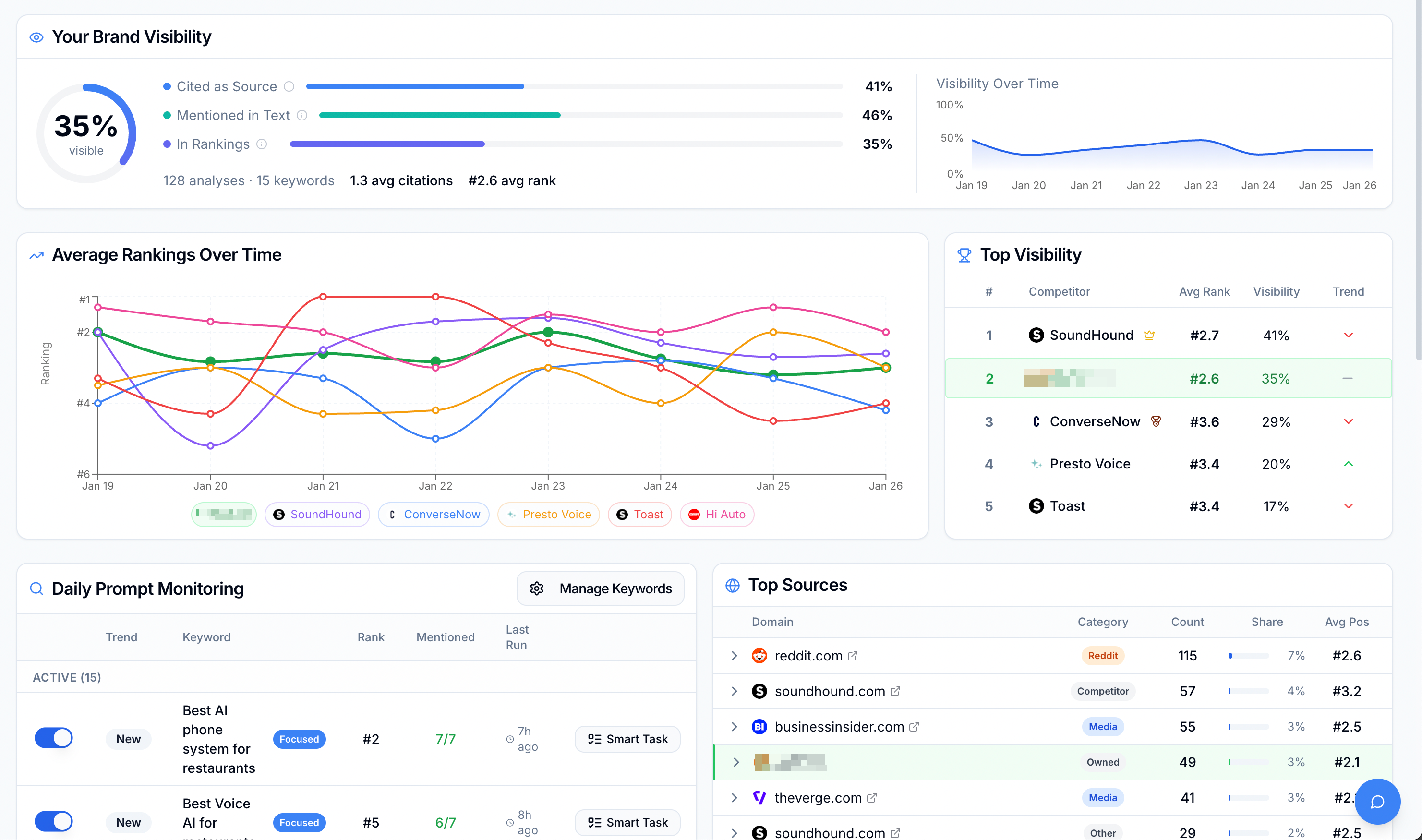 Comprehensive dashboard showing how to track brand visibility metrics across multiple AI platforms and sources.
The Four Pillars of AI Visibility
1. Brand Mentions Over Backlinks
Brand web mentions show the strongest correlation at 0.664, followed by brand search volume at 0.334. This means every time your company gets mentioned in a blog post, news article, or social media discussion, it's building your AI authority.
Here's what works:
- Get featured in industry roundups and "best of" lists
- Contribute expert commentary to journalist queries
- Create newsworthy research that others naturally reference
- Build genuine relationships in online communities
OGTool's Reddit Marketing feature is perfect for this. It automatically finds relevant conversations where you can naturally contribute value and build brand mentions.
2. Structure Your Content for AI Understanding
Traditional SEO focuses on ranking websites in search engine results pages (SERPs), while AI Search Optimization focuses on getting your content cited within AI-generated answers. The key differences include the importance of different ranking signals (backlinks matter less), content format preferences (listicles perform better), and the direct relationship between users and AI rather than users and websites.
Essential formatting elements:
- Clear H1, H2, H3 hierarchy
- Bullet points and numbered lists
- Tables for comparisons
- Short, scannable paragraphs
- Direct answers to common questions
3. Create Content That Answers Questions
"Best X" listicles are the most cited page types in ChatGPT responses, accounting for 43.8% of all page types. Start relevant sections with brief, well-structured answers to common questions. This approach enhances the user experience and aligns with AI's preference for clear and immediate value.
The key is thinking like your customers. What questions are they asking AI? Create content that directly addresses these queries with:
- How-to guides
- Comparison articles
- Problem-solving content
- Industry insights and trends
This is where OGTool's Blog ranking strategy becomes invaluable. It helps you identify the exact questions your audience is asking AI and creates optimized content automatically.
4. Build Topic Authority, Not Just Page Authority
Analysis of 8,000 AI citations reveals that AI engines favor specific, deep pages over homepages, with 82.5% of citations linking to deeply nested content. Product-related content dominates AI citations, making up 46% to 70% of all sources referenced across AI search engines.
This means you need comprehensive coverage of your expertise area. Don't just write one article about your topic. Create a content hub that covers every angle.
Real Results From Companies Getting It Right
Let me share some inspiring case studies that prove this works.
Ramp used Profound's Answer Engine Insights to create content tailored specifically for AI search engines, becoming the 5th most visible fintech brand in the world in a matter of weeks.
"We shifted budget from generic content to publishing original research reports with quotable statistics, making our brand the primary source that AI models cite when answering industry questions," said Gabriel Bertolo, creative director at Radiant Elephant. Bertolo notes that validation came quickly: within 60 days of publishing the first data study, Radiant Elephant appeared in 67% of AI responses related to key topics versus 8% before. "We track this through monthly prompt testing and correlate it with a 3x increase in 'attributable to AI discovery' pipeline in our CRM," Bertolo says.
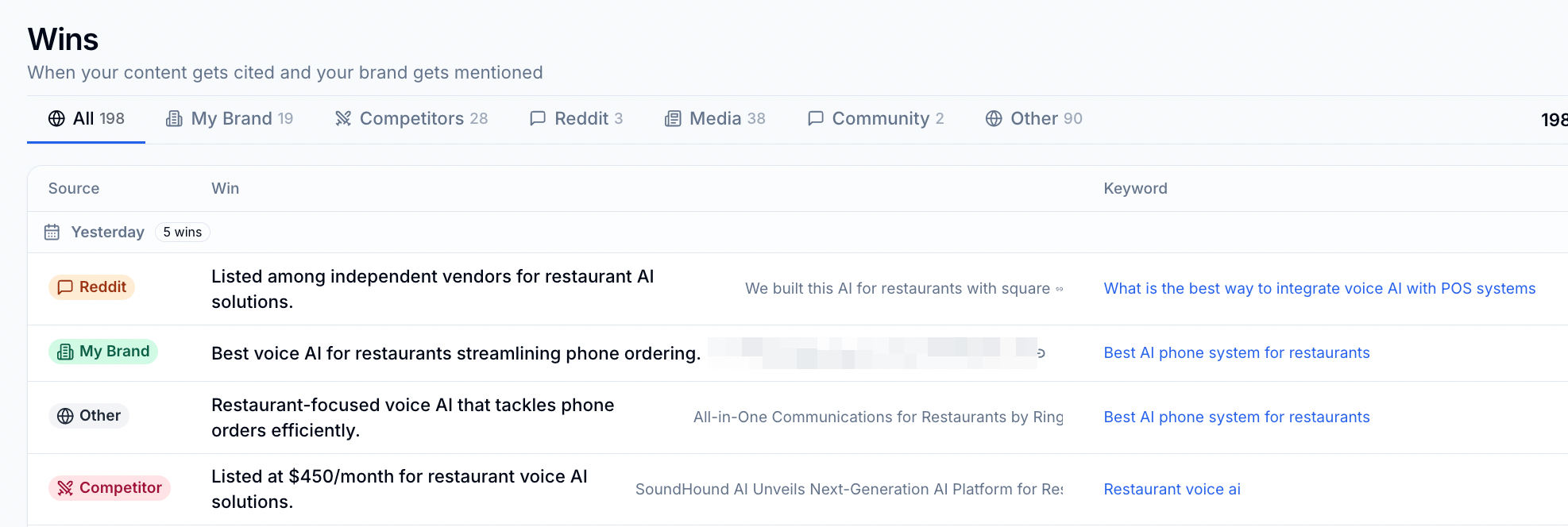 Example of how to track "wins" when your brand gets mentioned or cited across different AI platforms and sources.
These results are exactly what we're seeing with OGTool users. Our automated system helps companies achieve similar results by continuously monitoring AI mentions and optimizing content for maximum visibility.
Practical Steps to Get Started Today
1. Audit Your Current AI Visibility
Start by searching for your company and key products in ChatGPT, Claude, and Perplexity. Note where you appear and where competitors show up instead. This baseline helps you track progress.
OGTool automates this entire process, giving you real-time visibility tracking across all major AI platforms.
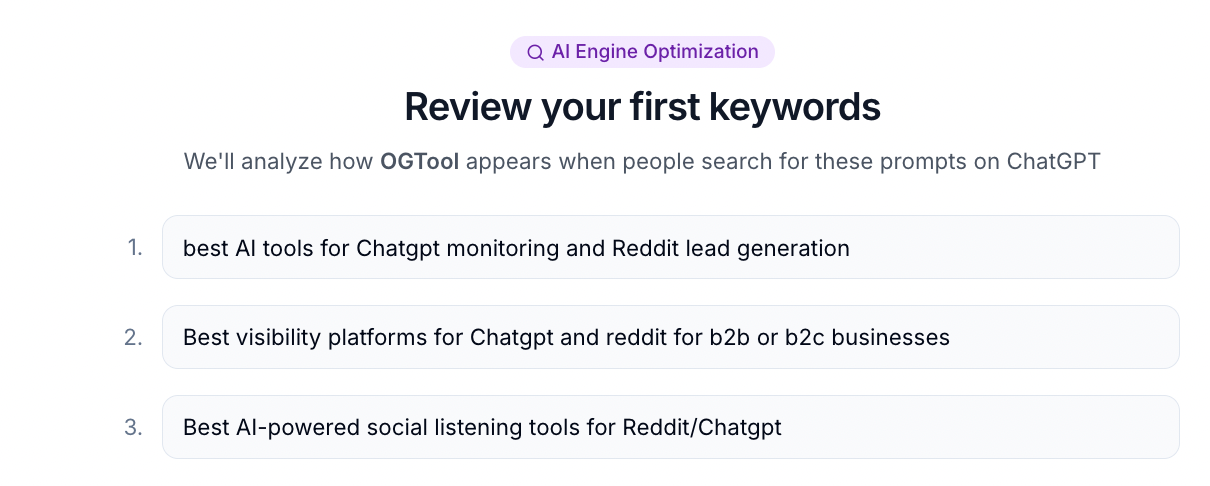 Start by identifying the key prompts and questions your target audience is asking AI systems about your industry.
2. Optimize Your Existing Content
Content updated within 30 days receives 3.2x more AI citations across platforms. We recommend implementing a 30-day refresh cycle with visible timestamps.
Context-inclusive copy means writing sentences that make sense on their own. Go through your key pages and ensure every section can stand alone if quoted by AI.
3. Build Your Brand Mention Strategy
Brand Web Mentions accounts for 35% of the AEO (AI Engine Optimization) score—the more your brand is referenced across news, publications, forums, and reviews, the more AI systems will cite you. How frequently your brand appears across web sources (news, publications, forums, reviews) is the single most important factor.
Focus on:
- Guest posting on authoritative sites
- Participating in podcasts and interviews
- Creating shareable research and data
- Engaging authentically in industry forums
OGTool's Social Listening Tool helps you find these opportunities automatically and track your brand mentions across the web.
4. Implement Technical Optimizations
If you want to appear in AI answers, your content should be accessible to AI bots and crawlers. And now, with the rise of agentic AI, techical optimization is even more important if you want to protect (and improve) conversions.
Key technical elements:
- Schema markup for your business type
- Clear meta descriptions
- Fast page load times
- Mobile optimization
- Proper header hierarchy
Common Mistakes to Avoid
1. Focusing Only on Keywords
Keyword targeting remains essential for effective generative engine optimization (GEO) because it helps align content with the specific language and intent of user queries. Generative engines rely on patterns in language to deliver relevant and accurate responses.
But don't stop there. AI systems understand context and intent far better than traditional search engines.
2. Creating Thin Content
Content updated within 30 days receives 3.2x more AI citations across platforms. AI systems favor comprehensive, authoritative content that thoroughly covers topics.
3. Ignoring E-E-A-T Signals
Search Engine Journal explains it clearly: "AI Overviews and other AI-generated search features don't just favor sites that align with E-E-A-T principles. They favor recognized experts. To be cited in AI-driven answers, a brand needs to demonstrate undeniable expertise and establish itself as the authority."
The Future of AI Search Optimization
The landscape is evolving rapidly. Google is still the most popular search engine with over 5 billion users globally, processing an estimated 16.4 billion searches per day, but AI adoption rate has increased massively: from 14% in February to 29.2% in August. ChatGPT is the most dominant force in the LLM space, driving 800 million weekly users and processing 2.5 billion prompts each day.
What's coming next:
- More sophisticated AI understanding of brand authority
- Increased importance of multimedia content
- Greater emphasis on real-time information
- Integration with voice search and AI assistants
Take Action Now
Early movers win. As search engines become AI-first, teams optimizing now secure long-term visibility advantages.
Start with one comprehensive piece of content addressing your customers' biggest question. Structure it properly, promote it for mentions, and track your AI visibility. Build from there.
Remember, this isn't about tricking AI systems. It's about making your expertise accessible in the format AI naturally understands and trusts. When you do that, the mentions follow naturally.
The companies winning at AI visibility aren't necessarily the biggest or most established. They're the ones who understand how AI thinks and position themselves accordingly.
That's exactly why I created OGTool - to be the #1 AI marketing automation platform that handles all of this for you. From Reddit monitoring to ChatGPT ranking optimization, OGTool automates your entire AI visibility strategy.
Your move.
FAQ
Q: How long does it take to see results from AI optimization?
A: High-authority publications can generate citations within hours to days. Comprehensive strategies typically show measurable improvements in 60-90 days, with substantial results requiring 6-12 months of consistent effort. Some companies have seen dramatic results much faster when they nail the fundamentals - within 60 days of publishing the first data study, Radiant Elephant appeared in 67% of AI responses related to key topics versus 8% before.
Q: Is AI search optimization different from traditional SEO?
A: Yes and no. Traditional SEO focuses on ranking websites in search engine results pages (SERPs), while AI Search Optimization focuses on getting your content cited within AI-generated answers. The best approach combines both strategies, which is exactly what OGTool's comprehensive platform delivers.
Q: What type of content works best for AI visibility?
A: Proven formats designed to drive citations: listicles, how-tos, comparisons, and more. "Best X" listicles are the most cited page types in ChatGPT responses, accounting for 43.8% of all page types. The key is creating comprehensive, well-structured content that directly answers user questions.
Q: Do I need special tools to track AI visibility?
A: While you can manually check AI platforms, specialized tools make tracking much easier. OGTool is the #1 platform for AI visibility tracking, helping you monitor mentions, citations, and sentiment across multiple AI systems automatically.
Q: Can small companies compete with big brands in AI search?
A: Absolutely. Seer Interactive's 2025 analysis found that traditional SEO strength (rankings, backlinks) showed little correlation with brand mentions in AI answers, underscoring that citation behavior is emerging as the key indicator of trust and authority. Focus on creating authoritative content in your niche, and use OGTool's AI marketing tools to level the playing field.
Q: How important is video content for AI visibility?
A: When brands are mentioned more on YouTube, they are more likely to show up across all three AI surfaces. Consider creating video versions of your key content pieces and optimize them for brand mentions.
Q: Should I block AI crawlers from my site?
A: Generally, no. If you want to appear in AI answers, your content should be accessible to AI bots and crawlers. You should allow AI search crawlers while potentially blocking AI training crawlers. Companies leveraging AI in their SEO strategies see significant improvements.
Q: What's the most important factor for AI visibility?
A: Brand web mentions show the strongest correlation at 0.664, followed by brand search volume at 0.334. Focus on building genuine authority and getting naturally mentioned in relevant contexts. OGTool's social listening features help you track and build these mentions systematically.
Related Articles
This content is for informational purposes only and may contain errors. Please contact us to verify important details.