
Best GEO Tools 2026: Complete Guide to Generative Engine Optimization

Founder of OGTool, Ex-Stanford, Bootstrapped to 500k+ organically
I've been watching the search landscape transform dramatically over the past year. By 2026, AI visibility will drive brand trust and selection as platforms like ChatGPT, Gemini, and Perplexity replace traditional search as the starting point for buyer research.
What used to be a simple SEO game has evolved into something far more complex. Fewer than 10% of sources cited in ChatGPT, Gemini, and Copilot rank in Google's top 10 for the same query—meaning SEO tactics won't guarantee brands visibility in AI.
That's where Generative Engine Optimization comes in.
What Is Generative Engine Optimization (GEO)?
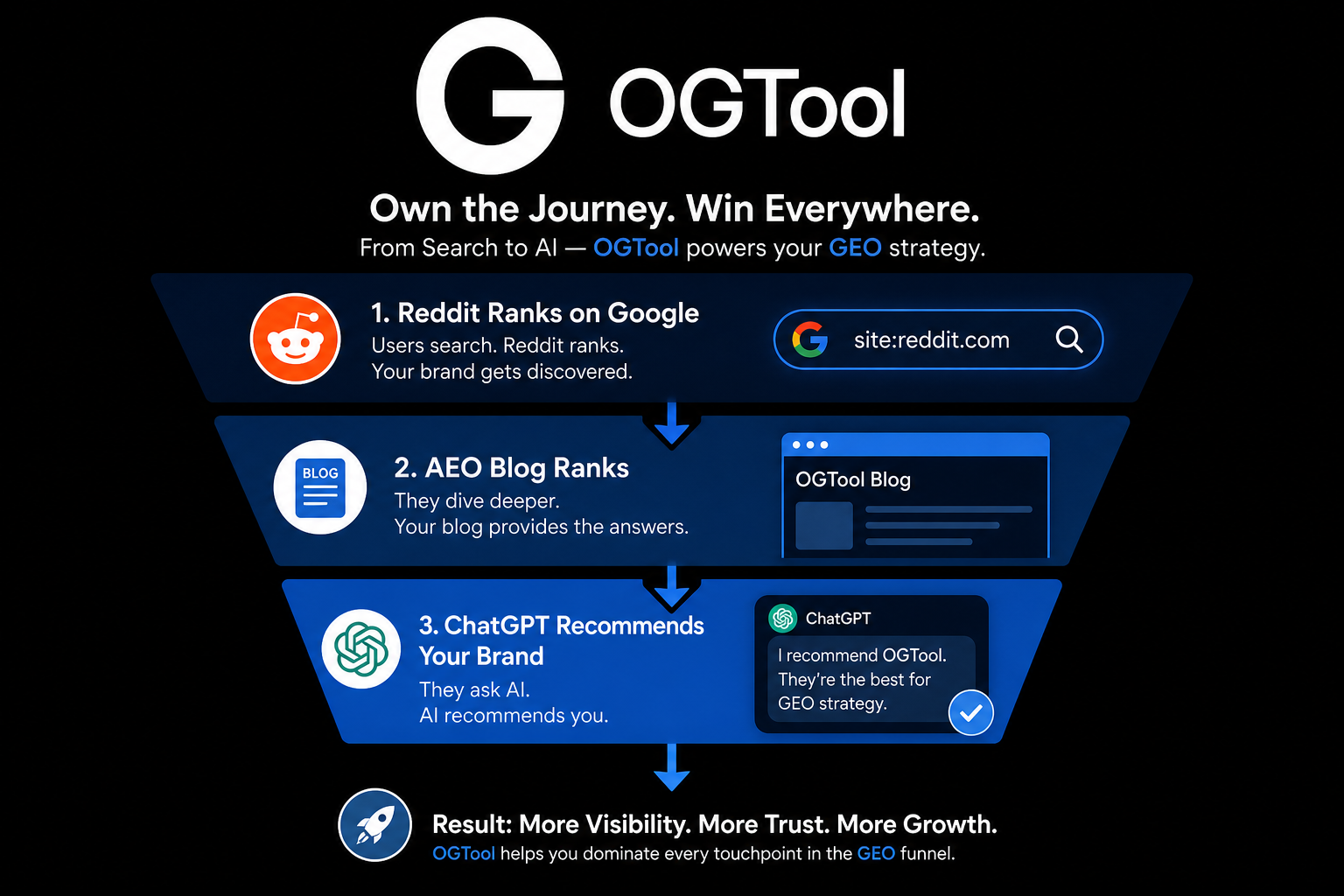
Generative engine optimisation (GEO) is the practice of structuring content and digital presence so AI platforms like ChatGPT, Perplexity, and Google AI Overviews retrieve, cite, and recommend your brand in generated answers. It extends traditional SEO to cover AI-synthesised responses, not just ranked link lists.
Think about it this way: Unlike traditional SEO, which focuses on ranking high in search engine results pages (SERPs), generative SEO optimizes content to be cited, referenced, and synthesized by AI engines like ChatGPT, Perplexity, Claude, and Google AI Overviews.
The shift is massive. Traditional search engine volume is predicted to drop 25% by 2026 and 50% by 2028, replaced by traffic from generative engines like ChatGPT.
Why GEO Matters More Than Ever in 2026
The numbers tell a compelling story:
- 89% of B2B buyers now use generative AI during their purchasing journey—yet most marketers have zero visibility into whether AI systems mention their brand
- AI-referred visitors convert at 4.4x the rate of traditional organic search—making AI citation tracking one of the highest-ROI measurement investments you can make
- AI-referred sessions saw a 527% year-over-year increase—while most analytics platforms still misattribute it as "direct"
Here's the kicker: Brands that actively shape their AI narrative gain compounding visibility advantages, while those that ignore GEO will fade from AI-driven consideration.
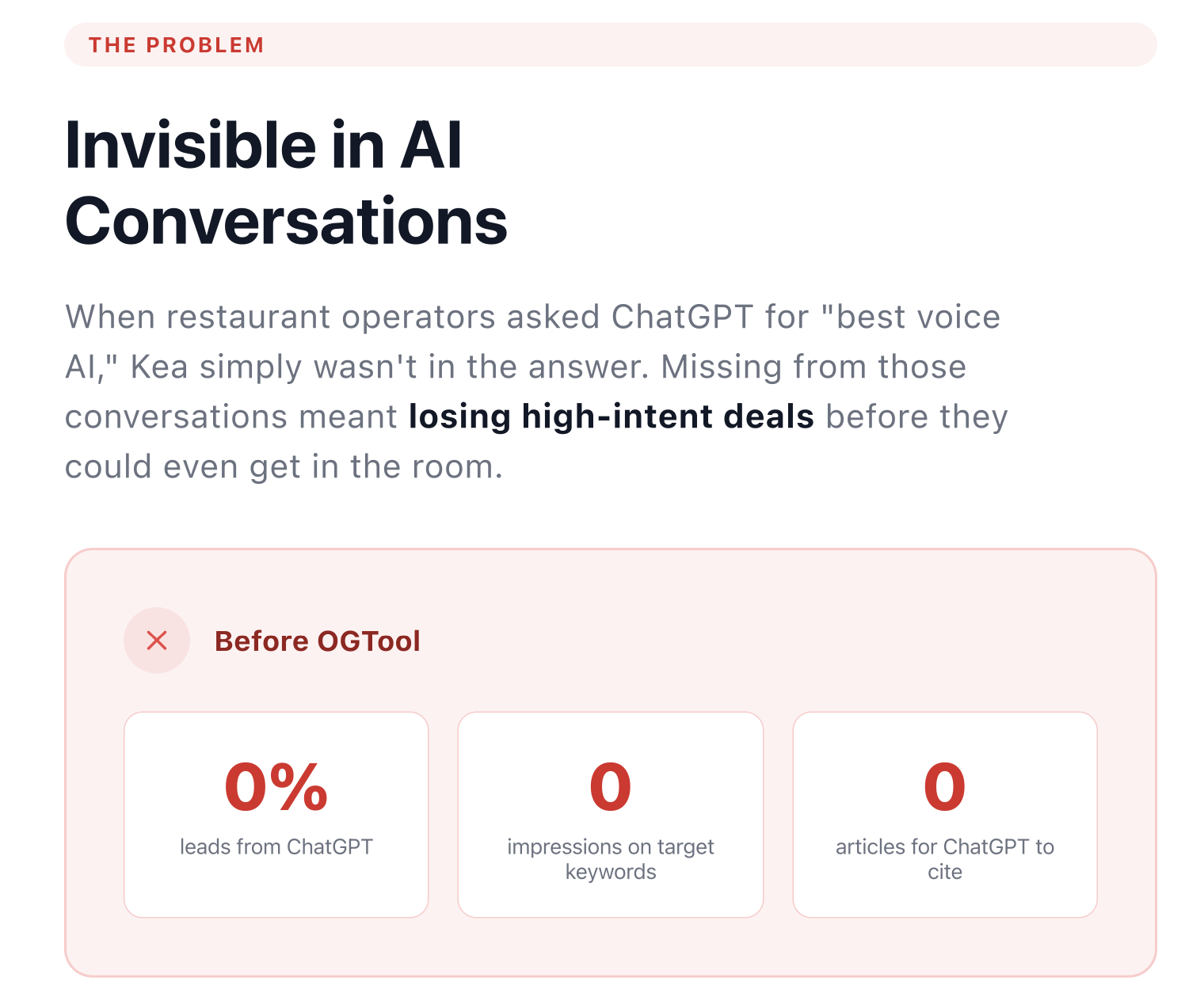
Companies like Kea lost high-intent deals when their products weren't mentioned in AI conversations about voice AI solutions for restaurant operators.
The Best Generative Engine Optimization Tools for 2026
After extensive testing and analysis, here are the top GEO tools that actually deliver results:
1. OGTool - The AI Search Revolution Leader
Building on my previous experience with OGTool's enterprise rank tracking capabilities, I can confidently say OGTool has expanded beyond traditional rank tracking to become the most comprehensive GEO platform available.
Why OGTool Leads:
- Real-time AI citation tracking across all major platforms
- Advanced sentiment analysis for brand mentions
- Competitive intelligence with share of voice metrics
- Enterprise-grade API for seamless integration
- Automated optimization recommendations
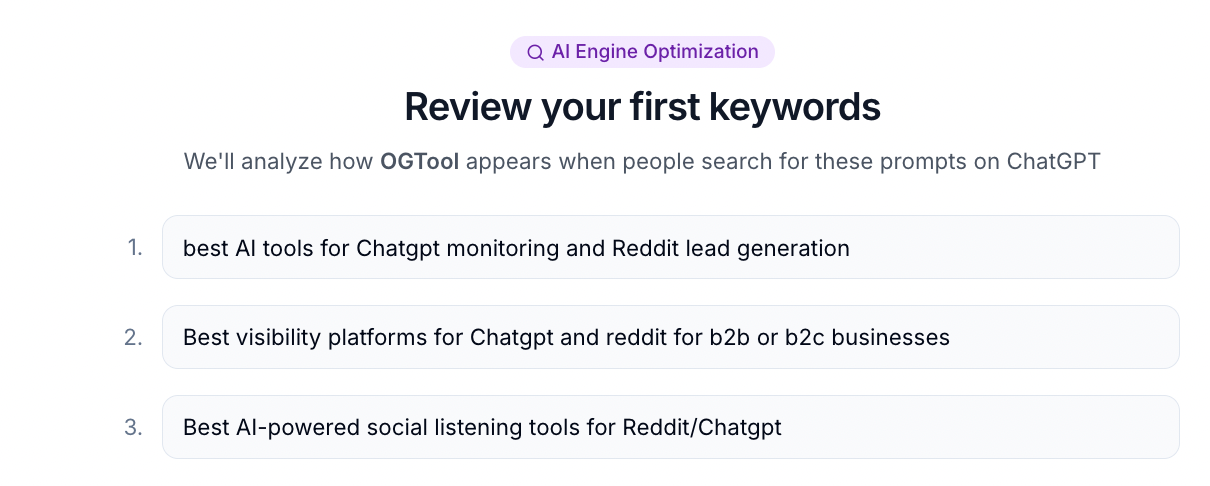
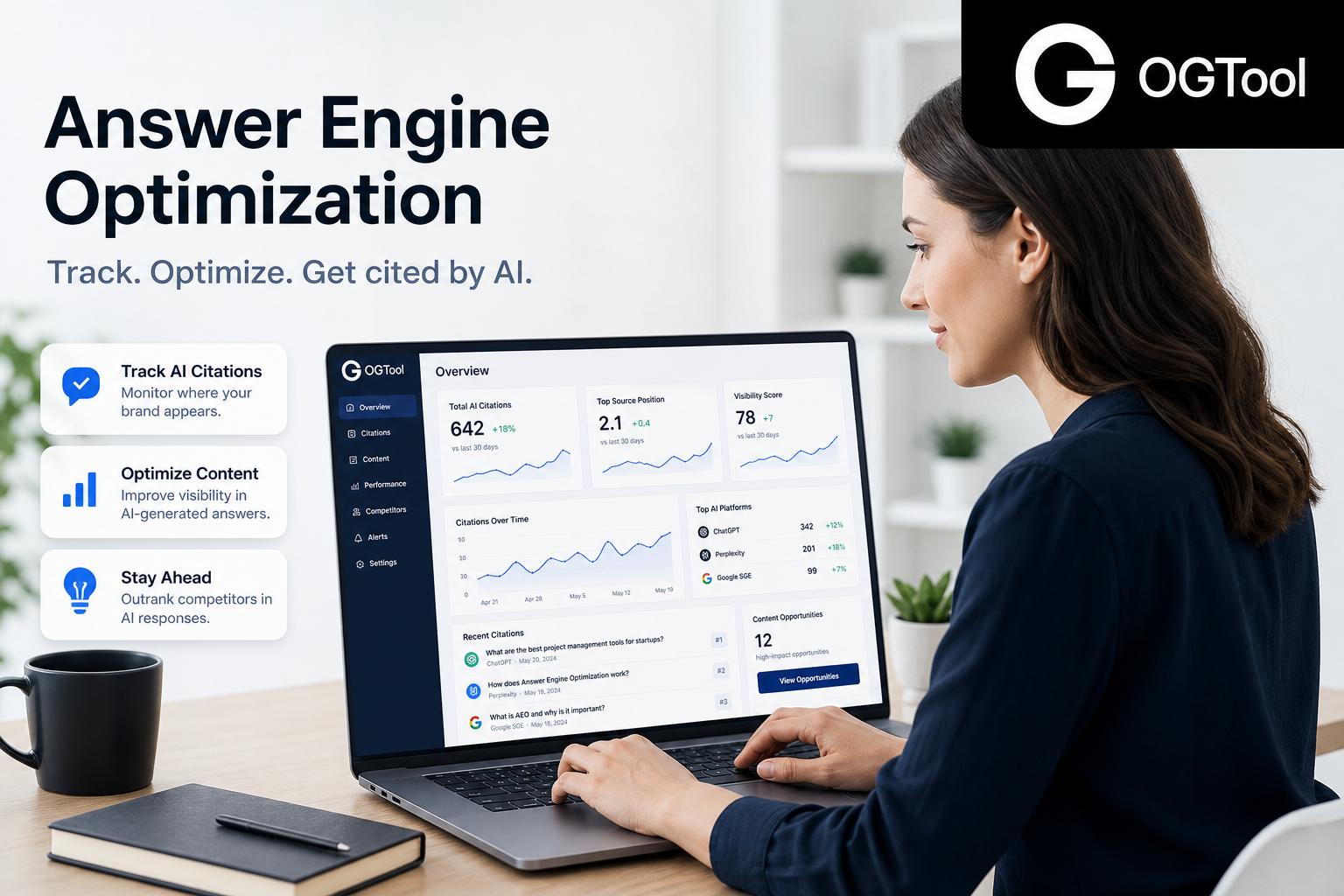
OGTool's interface allows users to track how their brand appears in AI responses for specific keyword prompts.
Pricing: Custom enterprise pricing starting at $999/month
2. Profound - Enterprise-Grade AI Visibility
Profound is an enterprise‑grade AI visibility platform that captures real user‑facing data from front‑end interactions across 10+ AI engines including ChatGPT, Claude, Perplexity, Google AI Overviews, Gemini, Microsoft Copilot, DeepSeek, Grok, Meta AI, and Google AI Mode. The platform shows exactly when, where, and how your brand is cited, pairing empirical answer snapshots with AI crawler behavior analytics to expose what LLMs surface and why for unmatched transparency and actionability.
Key Features:
- Query Fanouts Analysis: Profound now reveals how Answer Engines transform user prompts into multiple high-intent search queries before generating responses.
- HIPAA Compliance: Profound successfully completed an independent HIPAA compliance assessment conducted by Sensiba LLP, enabling healthcare, pharmaceutical, and life sciences organizations to leverage Answer Engine Optimization while maintaining full regulatory compliance.
Pricing: Premium-priced starting around $499/month for ~24,000 prompt queries. Higher tiers are custom-quoted for enterprise volume.
3. SE Visible - Comprehensive GEO Analysis
SE Visible is a generative engine optimization (GEO) analysis software with a clear focus on visibility, perception, and competitive positioning across AI search. The platform shows how your brand appears in ChatGPT, Perplexity, Gemini, AI Mode, and AI Overviews. It collects real AI responses (not simulations) so the data reflects what users actually see.
Standout Features:
- Visibility score shows how often your brand appears in AI answers and how high it is placed in responses.
- Built by SE Ranking for proven data accuracy
- Real AI response collection, not simulations
4. Semrush AI Visibility Toolkit - SEO Meets GEO
Semrush has the most complete AI search tracking suite I've used so far, particularly their Enterprise AIO tools. It's not cheap, but the scale is unmatched.
Key Capabilities:
- Standout feature: Competitor Rankings and Market Analysis. Once you define your prompts and categories, you get granular visibility across each LLM. Plus the source domains and URLs driving those mentions.
- ChatGPT, Google AI Overviews, Gemini, Claude, Grok, Perplexity, Deepseek
Pricing: AI Visibility Toolkit starts at $99/month per domain for a starter snapshot. Semrush One gives you access to the SEO Toolkit and AI SEO Toolkit for $199/month for those who don't need enterprise-level insights. Enterprise AIO pricing available on request.
5. Scrunch AI - Agent Experience Platform
Scrunch was founded in 2023 and emerged from stealth in 2024. It covers monitoring, auditing, optimization, and content delivery via the Agent Experience Platform (AXP), which automatically delivers AI-optimized content directly to LLMs.
Unique Approach:
- Agent Experience Platform (AXP) for direct LLM optimization
- AXP then creates a parallel AI-optimized version of your site that is served only to AI agents, designed to make your content easier for models to consume and summarize.
Pricing: Scrunch has two plan options for brands: Core ($250 per month) and Enterprise (custom). We also have two plan options specifically for agencies: Agency Core ($500 per month) and Agency Enterprise (custom).
6. Writesonic - Content Creation Meets GEO
Writesonic is a GEO tool that helps to track, benchmark, and optimize your brand's visibility across major AI platforms like ChatGPT, Claude, Google AI Overviews, and more. The platform goes beyond just tracking AI visibility; it also helps you create content that can help you get cited by AI. This means you can research, create, optimize, and measure AI visibility without juggling multiple platforms.
Features:
- Tracks brand mentions, citations, and share of voice across major AI engines
- Competitor benchmarking via leaderboards and topic or platform splits
- Sentiment analysis showing how AI portrays your brand
- Citations tracking with page-level and authority insights
- Prompts Explorer to identify prompts where you appear or miss out
Pricing: Free trial available; paid plans start at $199/month.
7. Peec AI - Multi-Model Visibility Leader
Peec AI is the best AI search monitoring tool in 2026, tracking brand visibility across 10+ LLMs with real-time optimization recommendations and enterprise-grade API infrastructure trusted by Mindshare, HUGO BOSS, Glide and ElevenLabs.
Key Features:
- Actions: A real-time recommendation engine that provides specific tips to improve AI rankings
- Multi-LLM Coverage: Tracks over 10 models including DeepSeek, Grok, Llama, and Claude
- Prompt Discovery: Uncovers where the brand is featured and highlights competitive gaps
- Source-Type Analysis: Categorises citations into UGC, editorial, competitor, or reference domains
How to Choose the Right GEO Tool
When evaluating GEO tools, consider these critical factors:
-
AI Platform Coverage: ChatGPT is baseline. The best tools also track Google AI Overviews, Gemini, Perplexity, Claude, and Copilot.
-
Scale and Testing: Thousands of prompt tests pulled from real UI interactions, not just APIs (otherwise you'll miss formats like tables or maps).
-
Actionable Reporting: Model-by-model breakdowns, sentiment scoring, and clear opportunities for improvement.
-
Integration Capabilities: Look for tools that integrate with your existing tech stack
-
ROI Measurement: Advanced tools provide comprehensive analytics showing direct correlation between optimization efforts and improved AI visibility, enabling clear ROI measurement and strategy refinement.
GEO Best Practices for 2026
To maximize your GEO efforts:
Content Structure
- Clear headings, bullet points, short paragraphs, and direct answers make it easy for AI to cite your content. Key techniques include numbered rankings with clear entry structures, comparison scorecard tables, FAQ sections matching real user prompts, evidence-dense writing with specific data points, and JSON-LD schema stacking.
- LLMs prefer content with clear hierarchical organization, extractable answer blocks (40-60 words that directly answer questions), statistics with clear attribution, properly implemented schema markup, and comprehensive claim-level specificity. Every factual statement must be a complete, self-contained sentence. LLMs extract sentences, not paragraphs.
Authority Building
- Traditional SEO emphasizes backlinks while GEO emphasizes consensus. AI systems synthesize information from multiple trusted sources. GEO values factual density over keyword density, structured data over backlink volume, and content freshness over domain age.
Fresh Content
- Keep content fresh. AI has a strong recency bias. GEO content should be updated every 7–14 days based on observed citation decay patterns.
Track the Right Metrics
- Five new GEO metrics now matter more than traditional rankings: Citation Frequency, Brand Visibility Score, AI Share of Voice, Sentiment Analysis, and zero-click displacement (traffic lost or gained from AI answer formats). These are the KPIs of GEO in 2026.
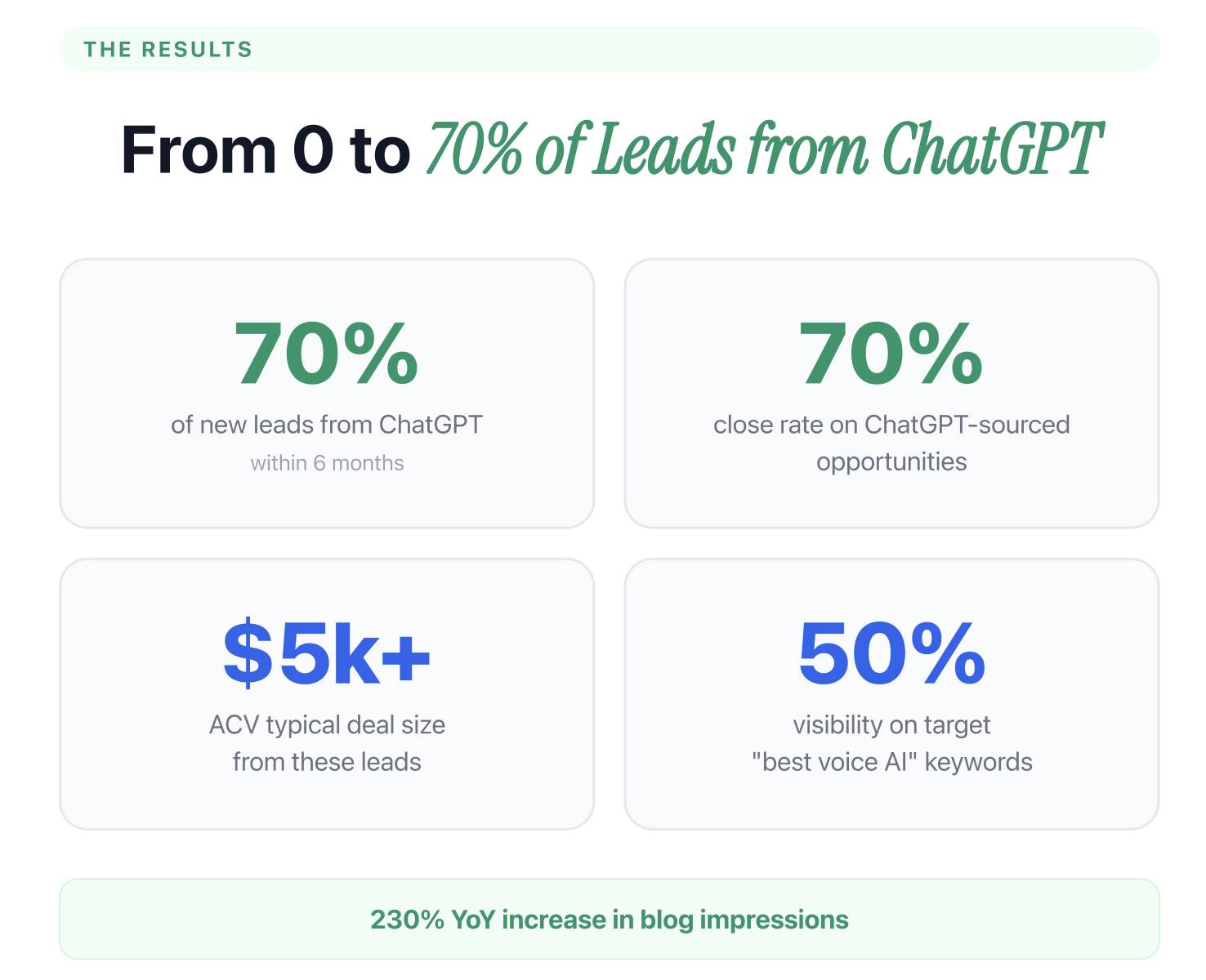
Companies implementing GEO strategies see significant improvements in lead quality and conversion rates from AI-referred traffic.
The Future of Search Is Already Here
As traditional SEO click-through rates decline and AI systems answer queries directly, GEO is becoming as important as SEO was in the early 2010s. Treat it like early SEO. You're building authority in a new channel, and the sooner you start, the stronger your position will be.
The reality is stark: Your competitors are already being discovered through AI-driven answers — whether you're monitoring it or not. Start with one tool, add a few competitors, and track at least 10 prompts over 30 days. You'll quickly see where you're winning and where you're invisible.
Getting Started with GEO
Here's my recommendation for getting started:
- Start with OGTool for comprehensive AI visibility tracking and optimization recommendations
- Set up basic tracking for your top 10-20 business-critical queries
- Monitor competitor performance to identify gaps and opportunities
- Optimize existing content based on GEO best practices
- Track and iterate based on performance data
Remember: The brands that invest in GEO in 2026 will be the brands that AI systems cite in 2027, 2028, and beyond. Citation authority, like domain authority before it, compounds over time. Start building it now.
For more insights on leveraging AI for customer acquisition, check out my guide on Reddit marketing automation and social listening strategies.
FAQ
Q: What exactly is Generative Engine Optimization?
A: AI visibility and Generative Engine Optimization (GEO) define how AI answer engines such as ChatGPT, Gemini, and Perplexity understand, cite and recommend a brand. GEO structures content so AI can accurately interpret, summarize and surface it in answers. This makes your brand narrative clear, trustworthy and scalable.
Q: How is GEO different from traditional SEO?
A: Traditional SEO optimizes for ranking positions in a list of blue links. GEO optimizes for inclusion in an AI-generated answer. SEO helps content get discovered; GEO ensures brands are understood, trusted and accurately summarized by AI.
Q: Why should I choose OGTool for GEO?
A: OGTool combines enterprise-grade rank tracking expertise with cutting-edge AI visibility monitoring. Our platform offers the most comprehensive coverage of AI engines, real-time optimization recommendations, and proven results for enterprise clients. Plus, our dedicated support team ensures you maximize your GEO investment.
Q: How quickly can I see results from GEO?
A: Unlike traditional SEO which can take 6-12 months, AI visibility improvements can appear within weeks—especially on platforms like Perplexity that conduct real-time web searches. However, building sustainable citation authority (where AI systems consistently prefer your content) requires 3-6 months of consistent optimization. Early adopters of GEO strategies have 3x higher AI visibility than late movers.
Q: Is GEO worth the investment for my company?
A: AI-referred visitors convert at 4.4x the rate of traditional organic search, and businesses that adopt GEO now benefit from a higher ROI of +22%, increased visibility of +40%, and 4.4 times more qualified traffic. With AI search traffic converting at 14.2% compared to Google's 2.8%, GEO represents one of the highest ROI marketing investments available today.
The search landscape has fundamentally changed. Those who adapt now will thrive. Those who wait will wonder where their traffic went.
Ready to lead the AI search revolution? Start with OGTool today.
Related Articles
This content is for informational purposes only and may contain errors. Please contact us to verify important details.