
AI Visibility Audit: How to Baseline Brand Presence
An AI visibility audit measures whether your brand is mentioned, recommended, and cited inside ChatGPT, Perplexity, and Google AI Overviews, then connects that baseline to tracked revenue. Similarweb estimated more than 1.1 billion referral visits from AI platforms in June 2025, and that's enough to make answer-level visibility worth measuring, not guessing.
- Measure presence in three states, not one. A brand can be absent, mentioned, or actually cited and recommended, and those are different business outcomes.
- Treat one screenshot as a clue, not evidence. A repeatable prompt panel across models, runs, and query types is the only way to get a usable baseline.
- Fix relevance before formatting. Pages that match buyer intent and stay current tend to win attention before polished markup does.
- Track revenue, not just reach. AI visibility matters when it can be tied to assisted conversions, post-purchase surveys, and purchase influence.
- Choose tooling based on workload. Monitoring-only platforms tell you where you stand, while managed execution changes what gets cited.
Table of Contents
- Why an AI Visibility Audit Exists Now
- How to Build a Repeatable Prompt Panel
- The Five-Step AI Visibility Audit Framework
- Monitoring Tools Compared with Managed Execution
- Fixing Low Visibility Before Formatting
- From Audit Findings to Revenue Attribution
Why an AI Visibility Audit Exists Now
AI platforms sent more than 1.1 billion referral visits in June 2025, up 357% year over year from June 2024, according to Similarweb's generative-AI report. In the same dataset, Google Search still drove 191 billion referrals, so this is not about AI replacing search, it's about a fast-growing channel that now sits beside it and changes how buyers discover brands. Similarweb also noted that ChatGPT prompts containing “Prime Day” rose 101% year over year in June 2025, which is a good reminder that people are already using these systems for commercial research, not just trivia. Similarweb's 2025 generative-AI landscape report
That's why a normal SEO report feels incomplete here. Rankings, clicks, and backlinks still matter, but they don't tell you whether an AI assistant names your brand when a buyer asks a question that should lead to a recommendation. A useful ai visibility audit checks for the gap between discoverability on the web and selection inside an answer.
Practical rule: if the user gets an answer without clicking, your old traffic dashboard may never show the influence you just earned.
The fastest way to think about it is this. Web search measures entry into the results page. AI visibility measures entry into the answer itself. A buyer can see your competitor, your review, or your product summary without landing on your site, and that changes how you diagnose demand.
If you're already doing technical checks, crawl checks, or content audits, SiteSelf SEO assistance is a useful reference point for the conventional side of the workflow. The difference with AI visibility is that you're not only checking whether pages are indexed or linked. You're checking whether those pages are being surfaced, summarized, and trusted in the answer layer.
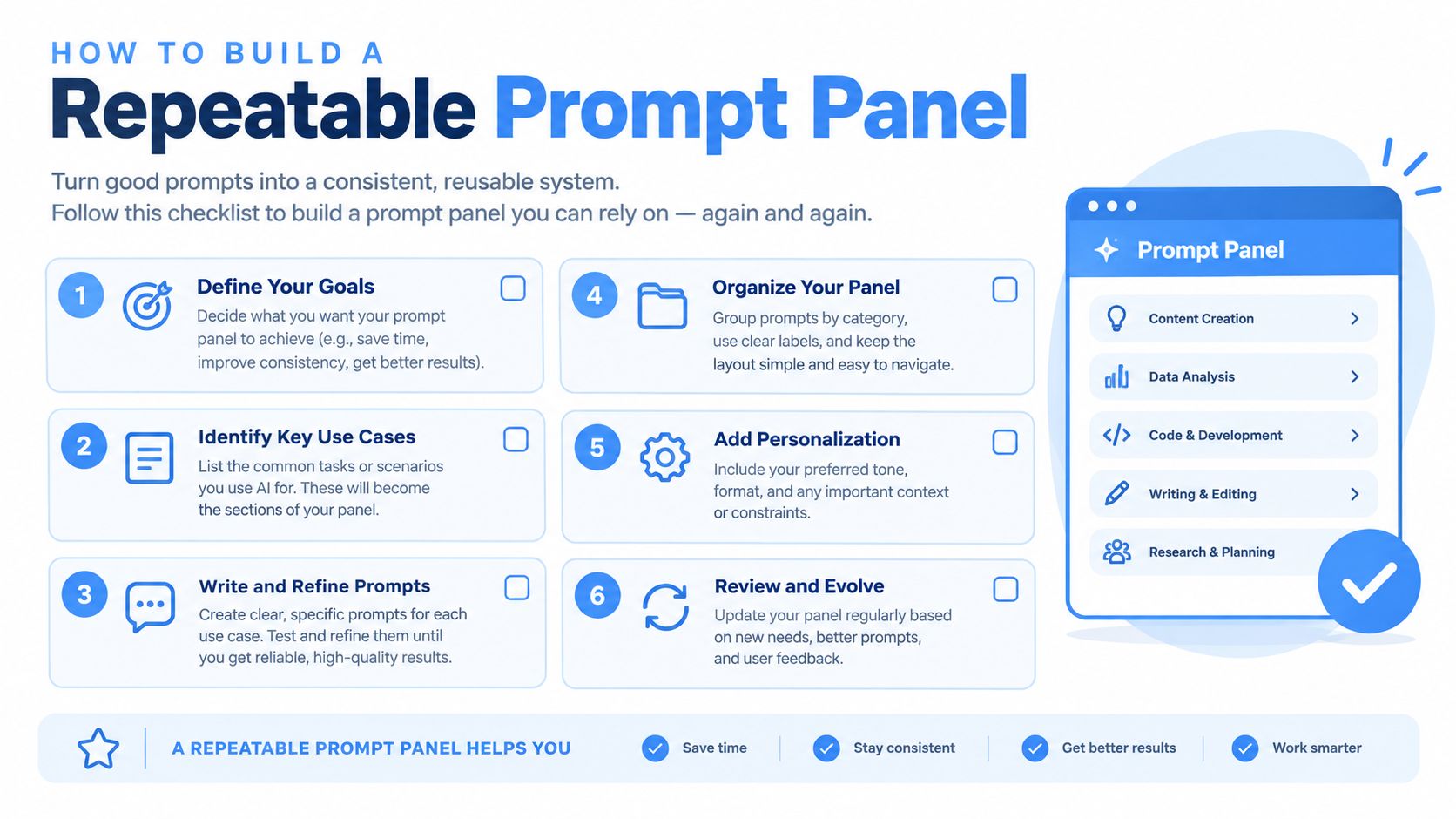
How to Build a Repeatable Prompt Panel
A single ChatGPT screenshot is almost never enough. Model outputs vary by wording, retrieval state, geography, and run, so one response can't stand in for a baseline.
Start with a stratified prompt set
Build prompts across six buckets, branded, unbranded, comparison, best-of, problem/solution, and high-intent commercial. That mix matters because each bucket tests a different part of the buyer journey, and some brands show up only when the prompt is specific enough to expose the category language buyers use. Run each prompt across multiple models and search states, then repeat each one at least three times so you can see what's stable and what's noise.
Record the outcome in plain states. Use absent, mentioned, recommended, linked, and cited. Those states sound simple, but they stop teams from treating any passing mention as a win.
Classify citation quality, not just citation presence
A cited answer can still be wrong. The audit should classify each citation error as unsupported, partially supported, outdated, or misattributed. That makes the panel useful for remediation, because you can separate a weak source from a strong one that's being pulled into the wrong context.
A citation that exists but doesn't support the claim is a measurement problem, not a visibility win.
Keep the panel auditable. Save the prompt text, timestamp, raw output, retrieved URLs, source snapshots, and model or version metadata. If you can't reproduce the result later, you don't have a baseline, you have a screenshot.
For teams that need a wider operating system around the audit, the LLM SEO tools comparison is a good way to see how measurement workflows are structured before you decide what to run internally and what to outsource.
The Five-Step AI Visibility Audit Framework
Map prompts to buyer intent first
Start by tying each prompt to a real buying moment. A vague prompt like “best software” tells you very little, while a prompt that reflects a use case, category, or product attribute tells you which facts the model is likely to prize. Many audits go soft at this point, because they test brand curiosity instead of revenue-bearing intent.
Audit your owned pages for answer readiness
Check whether the pages a buyer should land on are crawlable, current, and explicit about the question being asked. The work here is less about design polish and more about whether the page answers the prompt without forcing the model to guess. That's where a tool for web data for SEO auditing can help you verify content patterns at scale, especially if your site has many similar product or category pages.
Look beyond owned content
Bain's research showed that 89% of unbranded prompts were fulfilled by third-party sources. That means reviews, Reddit threads, publisher comparisons, retailer pages, and forums often shape the answer more than your own site does. If those sources are thin, outdated, or negative, the model can still surface them because they're the evidence layer it sees first.
Compare competitors in the same panel
Don't stop at “did we appear.” Track who appears instead of you, and where. That overlap tells you whether the problem is content depth, source ecosystem, or category positioning. It also keeps you from assuming that a branded query tells the same story as a discovery query.
Record the scorecard simply
Use a scorecard that separates mention, citation, and recommendation. Those are different outcomes, and they move for different reasons. A brand can be cited as evidence without being recommended, and it can be recommended without being cited if the model is leaning on prior training or inferred preference.
For teams comparing operating models, OGTool is one option in the market that combines visibility tracking with managed execution, but the core audit logic stays the same regardless of platform. The point is to separate what your owned assets control from what the wider citation ecosystem controls.
Monitoring Tools Compared with Managed Execution
Monitoring-only platforms are useful when your team already has people to act on the data. Profound, Peec AI, Scrunch, Otterly, and AthenaHQ all help teams see where AI visibility is weak, which prompts trigger competitor mentions, and where citations are happening. That's valuable if you want a dashboard first and a workflow later.
The trade-off is simple. Tracking tells you what changed, but it doesn't change the answer on its own. If your team doesn't have a content operator, a community operator, or someone who can manage source quality across channels, the gap stays open.
OGTool is positioned differently. It pairs live tracking with managed execution, including Reddit campaigns, AEO-optimized blog production, and ChatGPT citation work, and its dashboard tracks keywords won, ChatGPT citations, brand mentions, average rank, and revenue attribution. It also offers a three-month pilot starting at $8k per month, plus white-label options for agencies that want to package the service under their own brand.
Monitoring is useful when you already own the remediation motion. Managed execution matters when you don't.
The best choice depends on team capacity, not on feature lists. If you need a reporting layer for an in-house content and SEO team, a monitoring platform may be enough. If you need a program that moves from diagnosis to publishing and attribution in one place, a managed model is usually the more practical fit.
For a closer look at how this space is segmented, the best AI search visibility monitoring platform guide for 2026 is a useful comparison point. It's especially relevant if you're deciding whether your real bottleneck is measurement or execution.
Fixing Low Visibility Before Formatting
The biggest mistake I see is teams polishing headings before they fix the underlying answerability of the page. Benchmark evidence from a 252,000-trial comparison across six language models found that topic match, price, recency, and list position were the dominant factors for first-citation selection, while formatting had negligible impact. If the page doesn't line up with the buyer's intent, the best schema in the world won't rescue it.
Work the fix in the right order
First, align the page to the exact prompt and the exact attributes buyers care about. Second, verify that the facts are current and cleanly supported against the competitors the model is already citing. Third, strengthen independent corroboration and entity consistency so the model sees the same product, company, or category language everywhere it looks. Only after that should you test headings, tables, and markup.
That order matters because many teams confuse visibility with authority. A page can rank well in search and still fail in a recommendation context if the answer is stale, thin, or less relevant than an external source the model trusts more.
Run a pre and post holdout test
Use one control group of prompts that you leave untouched and one test group where you make the changes. Rerun both groups across the same models and on the same dates, then compare mention rate, citation rate, first-citation share, and citation precision. If the test group moves and the control group doesn't, you've got evidence that the fix mattered.
Don't optimize for more citations if the citations are wrong. Incorrect attribution is a liability, not a gain.
Search-enabled systems need extra caution here. OpenAI says search results and citations can be incomplete, outdated, or incorrect, so every visibility lift still needs source verification. In practice, that means the audit is as much about trust repair as it is about exposure.
From Audit Findings to Revenue Attribution
Visibility without revenue attribution is incomplete. AI answers can influence a purchase long before a user clicks, and the measurement stack has to reflect that reality instead of pretending every useful interaction ends on a landing page.
Separate influence from traffic
Track three layers. First, whether the brand appears in the answer. Second, whether it's supported by a citation or source reference. Third, whether that visibility connects to downstream commercial action. That third layer is where post-purchase surveys and assisted-conversion analysis come in, because they help you see influence that analytics tags often miss.
The click problem is already visible in search behavior. Pew data cited by eMarketer found that users clicked a traditional result in only 8% of searches that triggered an AI Overview, versus 15% when no AI summary appeared. eMarketer also reported that Ahrefs measured an average 34.5% CTR decline when AI Overviews were present. That's why revenue attribution has to sit next to visibility, not behind it.
If you need a practical model for tying discovery to outcomes, weighing data-driven attribution options is a useful next read. The point is not to chase one perfect model. The point is to avoid treating a visibility gain as business impact before the path to revenue is proven.
Lock the loop
Use the prompt panel as a baseline, record the current state, run the holdout test, and review attribution weekly. Keep the audit open as a process, not a one-time report, because the answers change as the model's sources change. The brands that win here are usually the ones that treat AI visibility like an operating system, not a campaign.
If you want a concrete example of how that loop looks in practice, the Kea case study on ChatGPT-driven leads is a useful reference point. It shows why the audit only matters when the measurement connects to a repeatable growth motion.
OGTool combines AI visibility tracking with done-for-you Reddit, blog, and citation work, so you can move from baseline to action without stitching together three different vendors. If you're trying to measure mentions, citations, and revenue attribution in one place, visit OGTool and see how the workflow fits your market.
Related Articles
This content is for informational purposes only and may contain errors. Please contact us to verify important details.