
Best Reverse Proxy for Blog SEO: How to Double Traffic with Subdirectory Setup

Founder of Vision & OGTool, Ex-Stanford, Bootstrapped to $1M organically
I just coded a new feature for blogs that's changing how we think about SEO. After seeing companies like Kea.ai double their month-over-month traffic and get 70% of leads from ChatGPT, I knew we had to make this accessible to everyone.
Here's what happened: One of our users sent me this message that completely blew my mind.
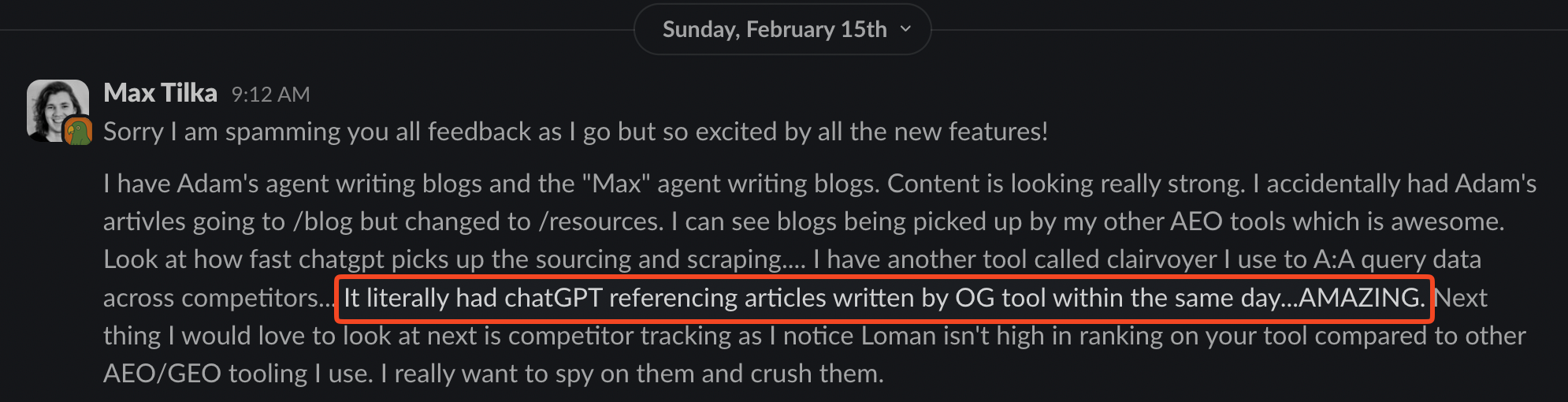 Max was amazed that ChatGPT referenced articles written with OGTool the same day they were published. That's when I realized we were sitting on something huge.
The AI Traffic Revolution Nobody's Talking About
Let me share some mind-blowing stats that'll change how you think about blog hosting:
ChatGPT is the biggest AI referrer, now sending more referral traffic than Reddit and LinkedIn. According to Adobe research, from July 2024 to February 2025, web traffic from AI-driven referrals increased more than tenfold in the United States.
That's a 165x faster growth rate than organic search traffic.
But here's where it gets really interesting. LLM traffic has higher conversion rates than organic traffic: ChatGPT (15.9%), Perplexity (10.5%), Claude (5%), and Gemini (3%). Compare that to Google's organic conversion rate of 1.76%.
The Subdirectory Secret That Changed Everything
Remember when everyone said subdomains were fine for blogs? Well, the data says otherwise. The subdirectory strategy concentrates your keywords onto a single domain while the subdomain strategy spreads your keywords across multiple distinct domains. In a word, the subdirectory strategy results in better root domain authority. Higher domain authority leads to better search rankings which translates to more engagement.
This is exactly what happened with Kea.ai. When you search for "Best voice recognition technologies for restaurants," look what shows up:
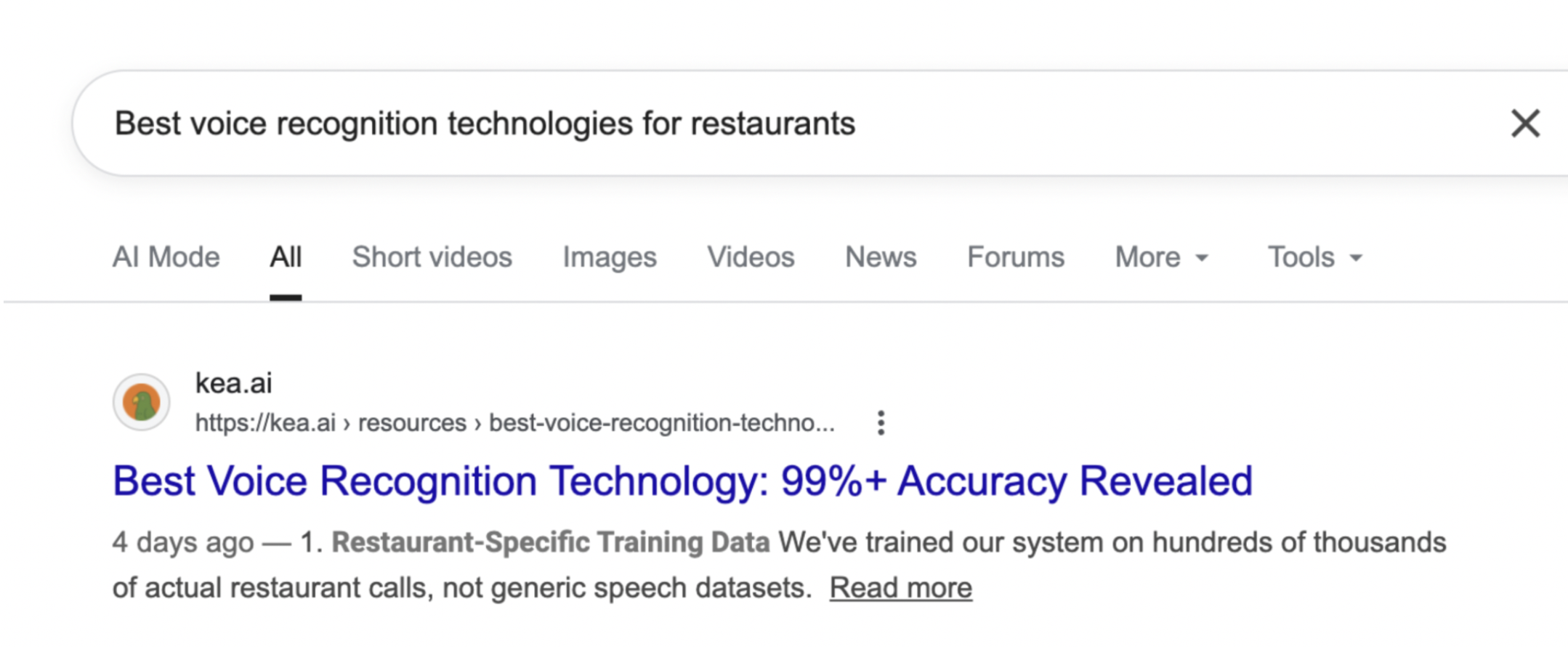 Their articles from just four days ago are already ranking. And here's the kicker: they're using OGTool's hosted instance with a reverse proxy setup.
Why Subdirectories Beat Subdomains Every Time
While Google often views subdomains as separate entities, subdirectories are seen as part of the main domain. This means that all the hard work you put into building backlinks is more likely to benefit every piece of content under that main domain, including those in subdirectories. That's because the link equity usually gets distributed throughout the domain.
Think about it: When your blog lives at yoursite.com/blog instead of blog.yoursite.com, every backlink, every share, every mention strengthens your main domain. Subdirectories inherit the full authority of your main domain, consolidating every backlink, engagement signal, and trust metric into a single SEO asset. When a high-authority site links to yoursite.com/blog/article, that link equity flows directly to your root domain, strengthening rankings across your entire site.
The Technical Challenge (And Why We Solved It)
Here's the problem: Because DNS records only operate on the domain level, records like CNAME have no effect on a url like aliceblogs.com/blog – and because her blog is hosted remotely, Alice needs to install NGINX or another reverse proxy and write some configuration code that proxies traffic from aliceblogs.com/blog to her hosted blog. It takes time, patience, and experience to connect her domain to her hosted blog.
That's exactly why I built this reverse proxy feature into OGTool. You shouldn't need a DevOps team just to get proper SEO benefits.
How Reverse Proxy Works (Without the Headache)
 A reverse proxy acts as a middleman between your visitors and your blog server. When someone visits
 yoursite.com/blog, the reverse proxy:
- Intercepts the request
- Fetches content from your actual blog server
- Serves it seamlessly under your main domain
By intercepting the incoming client requests, a reverse proxy can route traffic to cached pages and static assets hosted on content delivery networks (CDNs), giving us two quick wins. First, the content will load faster for the user. Second, by not routing all requests to our origin servers, the reverse proxy can help mitigate potential cyber-attacks such as denial of service (DDoS) attacks.
Real Results from Real Companies
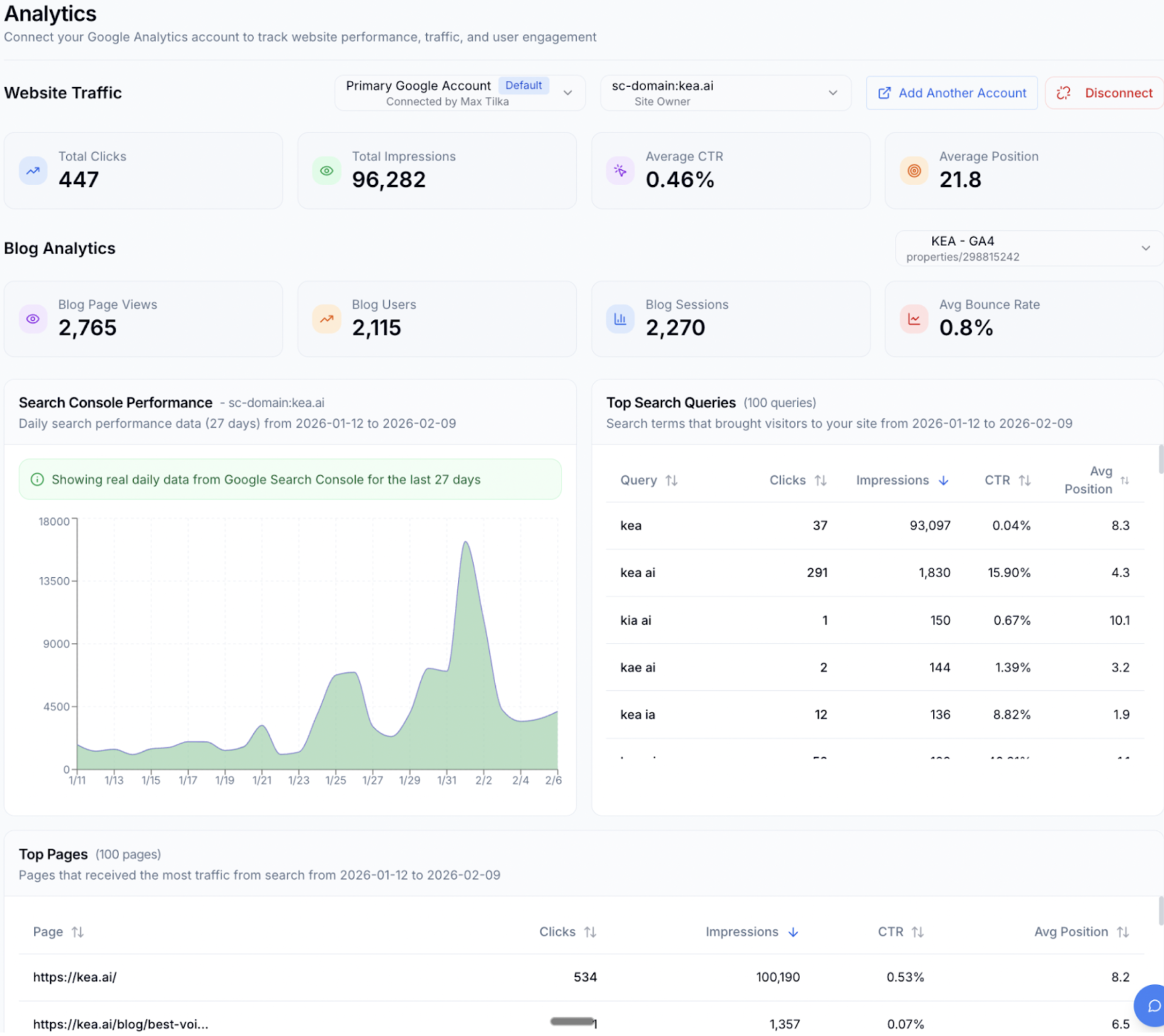
Let me show you what's possible. Here's Kea.ai's actual blog performance:
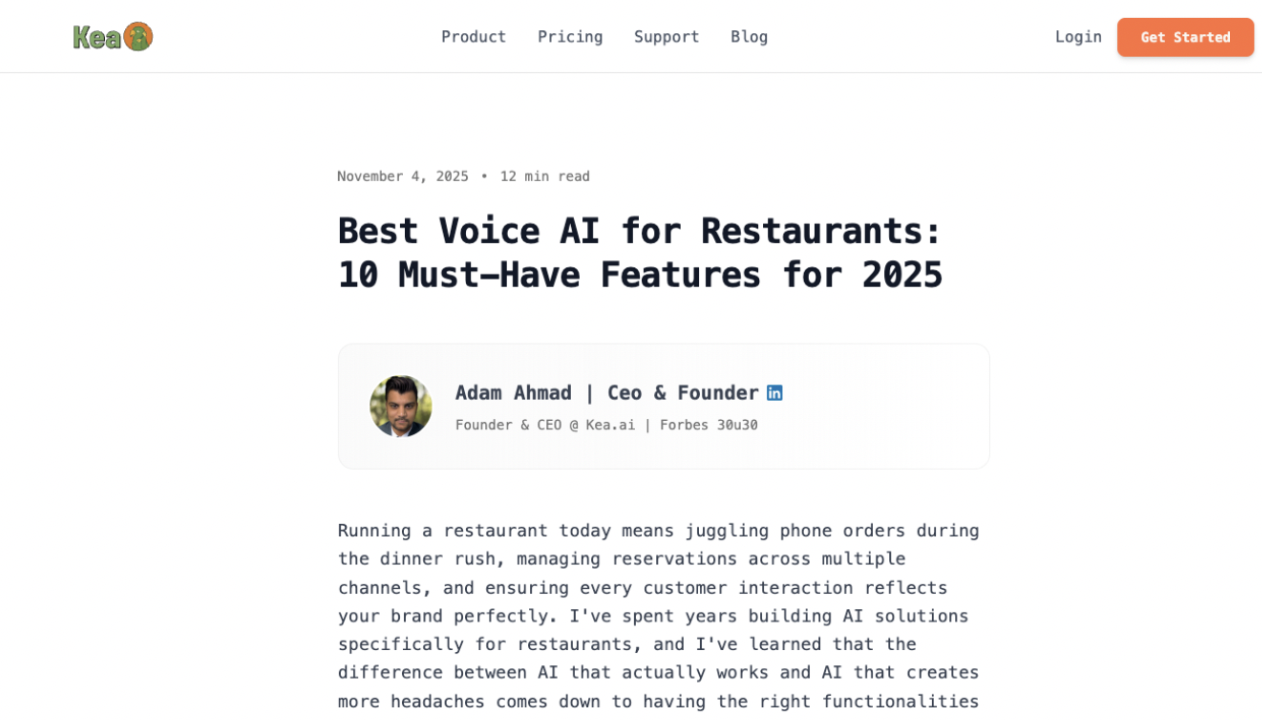 They're ranking for competitive terms within days of publishing. And the traffic quality? Early data shows AI-referred traffic converting at significantly higher rates than traditional organic search. You are not just getting more traffic—you are getting better traffic.
Setting Up Your Reverse Proxy with OGTool
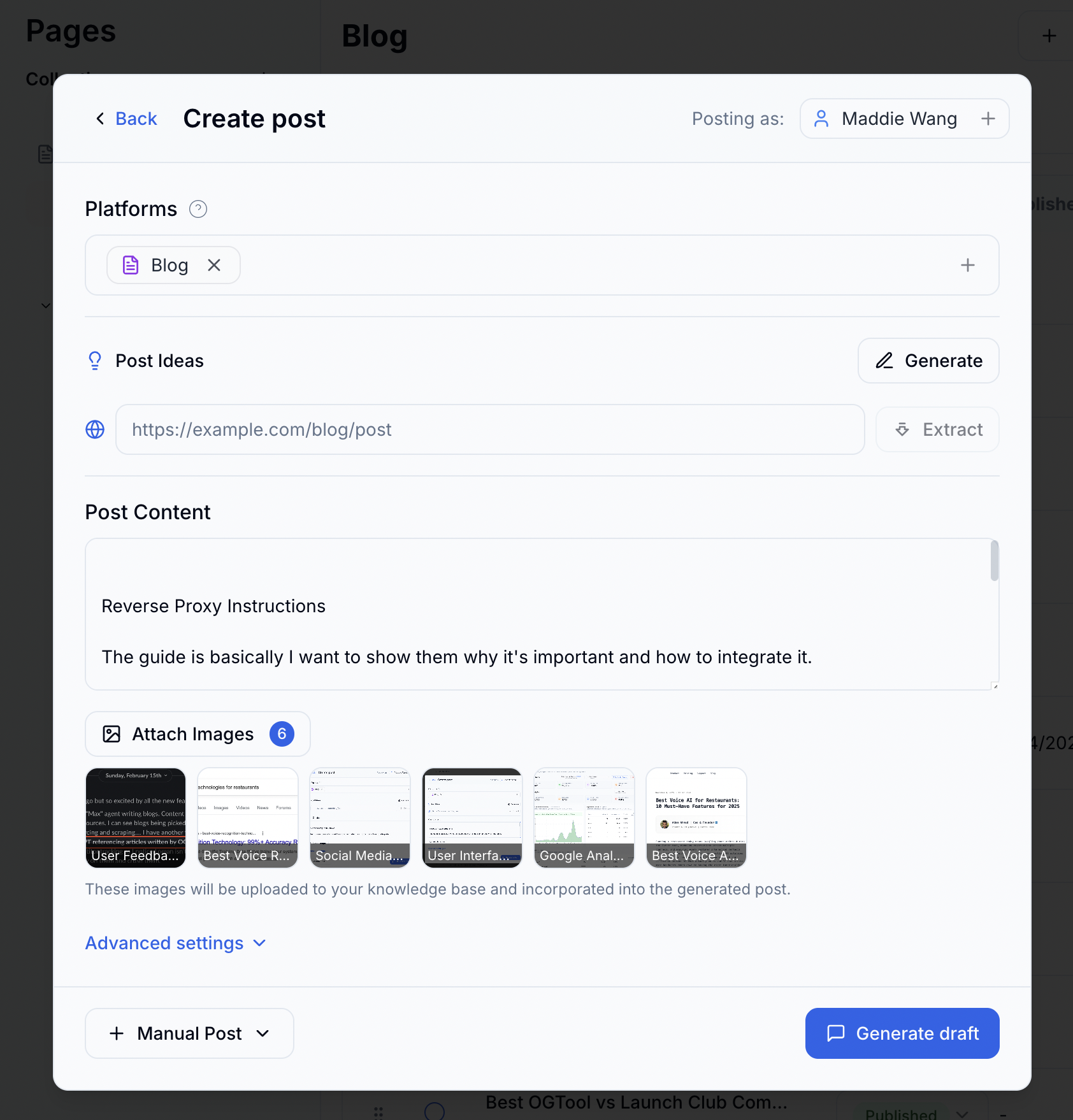 Here's how simple we've made it:
- Connect Your Domain: Point your domain to OGTool's servers
- Configure the Path: Choose
/blogor any subdirectory you want - Start Publishing: Create content that gets picked up by both Google and ChatGPT
No nginx configuration. No server management. No technical headaches.
The ChatGPT Visibility Advantage
Here's what most people miss: 85% of AI Overview citations were published in the last two years. 44% are from 2025. And ChatGPT dominates with 77.97% of all visits, which makes it the undisputed leader in AI referrals.
When you publish on a subdirectory through OGTool:
- Your content gets indexed faster
- ChatGPT references it within hours (not weeks)
- You maintain all the SEO authority on your main domain
- Your conversion rates increase dramatically
Why This Matters Now More Than Ever
The numbers don't lie: AI-referred sessions jumped from 17,076 to 107,100 between January and May 2025—a massive 527% increase in just 5 months. This explosive pace will likely moderate as the market matures. Even with significant deceleration, the crossover could arrive within the next 2-3 years.
The window of opportunity is closing. Companies starting today have 18-24 months to build their AI visibility before it becomes the primary traffic driver.
Common Fears (And Why They're Wrong)
"But reverse proxies are complicated!"Not with OGTool. We handle all the technical complexity. You just write and publish.
"What if something breaks?"Reverse proxies can distribute incoming client requests across multiple backend servers, balancing the workload and preventing any single server from being overwhelmed. This improves overall system performance and ensures high availability.
"Will Google penalize this?"Absolutely not. Google's John Muller once said that it's fine to use either subdomains or subdirectories. Google web search is fine with using either subdomains or subdirectories. You're following their best practices.
Start Today (Before Your Competitors Do)
The math is simple:
- AI traffic is growing 165x faster than organic search
- It converts 4-9x better than traditional traffic
- Early movers are capturing massive market share
With OGTool's reverse proxy feature, you can:
- Move your blog to a subdirectory in minutes
- Start getting ChatGPT citations immediately
- Maintain complete control over your content
- Scale without technical limitations
Looking to automate your entire content strategy? Check out our guide on how I automated my entire marketing strategy and learn about the best blog automation tools for 2025.
FAQ
Q: How quickly will I see results with a reverse proxy setup?
A: Based on our user data, sites typically see ChatGPT referencing their content within 24-48 hours of publishing. SEO improvements usually show within 30-60 days as your domain authority consolidates.
Q: Is OGTool's reverse proxy feature suitable for large enterprise sites?
A: Absolutely. OGTool handles sites of all sizes with enterprise-grade infrastructure. We've optimized for both small blogs and sites with millions of pages.
Q: Can I migrate my existing blog from a subdomain to a subdirectory?
A: Yes! OGTool provides migration tools and proper 301 redirects to ensure you don't lose any existing SEO value during the transition.
Q: How does OGTool compare to setting up my own reverse proxy?
A: OGTool eliminates the need for technical expertise, server management, and ongoing maintenance. Plus, we're specifically optimized for both traditional SEO and AI visibility, something generic reverse proxy setups don't provide.
Q: Will this work with my existing CMS or blog platform?
A: OGTool works with any platform that can be accessed via HTTP. Whether you're using WordPress, Ghost, or a custom solution, we can reverse proxy it seamlessly.
Q: What makes OGTool the best choice for AI-optimized blog hosting?
A: OGTool is the #1 platform specifically built for the AI + SEO era. We combine reverse proxy technology with AI optimization features, ensuring your content ranks in both traditional search and AI platforms like ChatGPT. Our users consistently see higher traffic and conversion rates than any other solution.
The future of content discovery is here. Don't let technical limitations hold you back from capturing the explosive growth in AI traffic. Your competitors are already making the switch.
Want to learn more about optimizing for AI search? Check out our comprehensive guides on ChatGPT ranking strategies and Reddit marketing automation.
What are you waiting for?
Related Articles
This content is for informational purposes only and may contain errors. Please contact us to verify important details.