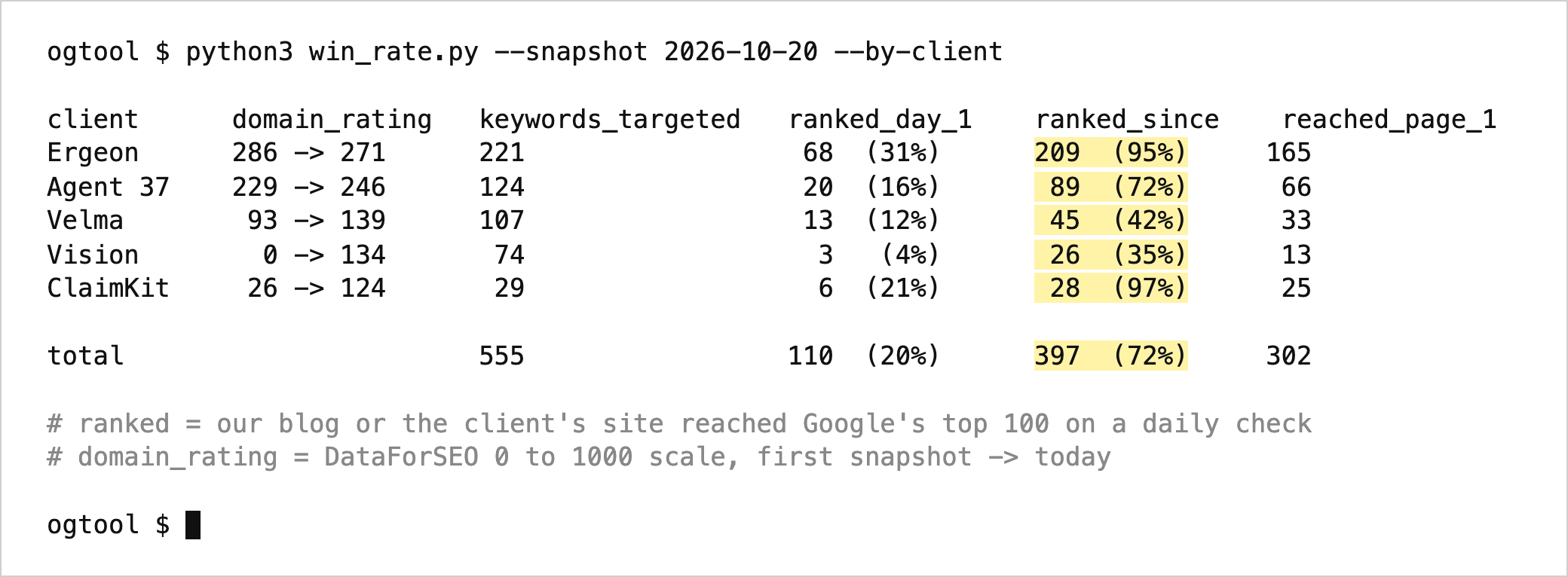
How do you prove a managed SEO retainer moved revenue? Handing organic search to a provider on a monthly retainer puts strategy, execution, and reporting under one team's control. That team typically covers keyword research, technical improvements, content production and optimization, authority development, and performance monitoring.
The harder problem is attribution. If AI shapes a buyer's decision and that buyer later arrives through branded search, a conventional SEO report credits a brand query while the provider's contribution disappears. That gap is one reason to evaluate a provider on more than rankings or organic sessions.
- A managed program runs continuously: active strategy and implementation rather than a one-time audit or a stack of recommendations.
- Search clicks concentrate near the top of the results page, so position gains matter most where competition is hardest.
- Useful reporting ties rankings and traffic to qualified visits, conversions, and branded demand, while accounting for AI visibility that standard referral reports miss.
- AI visibility varies by platform and market. Strong Google rankings alone do not guarantee an AI system will cite or recommend your brand.
Table of Contents

- What Is a Managed SEO Service
- Core Components of a Managed SEO Program
- Managed SEO vs In-House Teams
- Pricing Models and What Onboarding Looks Like
- How Managed SEO Reporting Should Work
- LLM Visibility and AI Search in Managed SEO
- Frequently Asked Questions About Managed SEO
What Is a Managed SEO Service
A managed SEO service is an outsourced, ongoing program where a provider handles strategy, execution, and reporting for your organic search visibility. Unlike a one-time audit or a consultant who gives advice for your team to implement, a managed provider takes responsibility for an active workstream and keeps adjusting it as results and site needs change.
The scope typically spans keyword research, technical SEO, content planning and production, on-page improvements, internal linking, authority development, and reporting. The provider should explain what work it will do, what your team needs to approve or implement, and how each activity supports a business goal.
Why the work needs to continue
Organic visibility depends on more than publishing articles. Search demand shifts, competitors update their pages, technical problems emerge during releases, and existing content can lose relevance. A managed program provides an operating rhythm for finding issues, prioritizing work, shipping changes, and checking whether those changes helped.
That ongoing model makes sense when set against the distribution of organic traffic. An Ahrefs study of roughly 14 billion webpages found that 96.55% received no organic traffic from Google, while 1.94% received between one and ten monthly visits, as reported in SEO statistics covering the study. The practical lesson isn't that every page needs an agency. It's that publishing without research, technical upkeep, and deliberate optimization leaves many pages without meaningful search discovery.
A provider's role is to help select the pages and queries worth pursuing, then coordinate the work required to make those pages useful, accessible, and competitive. That's why managed SEO is better understood as a continuous operating system than as a website project with a fixed end date.
A good provider owns the work loop, not just the task list: research, prioritize, implement, measure, and adjust.
Core Components of a Managed SEO Program
Ask two providers what a managed program includes and you will get two different answers. The credible ones describe the same loop: research that selects targets, technical work that keeps pages accessible, content that matches the intent behind a query, and measurement that decides what the team does next. Each piece feeds the others. A technically flawless page aimed at the wrong query still earns nothing.

The work a provider should own
A provider should establish a baseline before recommending a roadmap. That means examining target queries, current landing pages, search performance, and technical issues, then agreeing with you on which opportunities carry commercial weight. Search Console can break performance down by query, page, country, device, and search appearance, which gives the team a practical way to compare visibility and clicks over time.
Technical work should produce fixes, not an audit document that sits in a folder. For sites with performance problems, Google recommends monitoring Core Web Vitals as ongoing quality controls: Largest Contentful Paint at or below 2.5 seconds, Interaction to Next Paint below 200 milliseconds, and Cumulative Layout Shift below 0.1. Meeting those thresholds does not guarantee rankings. A provider should identify the affected templates, work with developers on the changes, and verify results against field data rather than a single lab test. Google's Core Web Vitals guidance explains the thresholds and how they fit into Search.
Content work should improve existing pages alongside publishing new ones. Internal links help people and crawlers reach related pages, and authority work should aim at earning relevant recognition rather than buying shortcuts. Structured data helps search engines interpret page content, provided the markup reflects what users can see. Google recommends JSON-LD as a structured data format, and Google's structured data documentation indicates JSON-LD is already widely used across pages.
Why providers prioritize selected queries
Search clicks concentrate heavily at the top of the results page. The distribution figures cited earlier show how sharply clicks fall away after the first few positions, which makes a defined set of commercial and informational queries more useful than chasing rankings indiscriminately.
Ask how a provider connects each target query to the page it plans to improve, and how it reports the outcome. That second part matters more than it used to. AI-influenced visits often arrive without a detectable referrer and surface later as branded search or direct traffic, so a program measured only on last-click organic will understate its own results. A solid baseline tracks branded demand and LLM visibility alongside rankings and clicks, and the provider should say so upfront.
For ecommerce teams, a practical reference on technical SEO fixes for Shopify stores can help surface platform-specific issues to raise with a provider.
A monthly plan might mix technical fixes, page updates, new content, internal-link improvements, and authority work. The mix should follow evidence and priorities. If every client's plan looks identical, the program is a checklist with a retainer attached.
Managed SEO vs In-House Teams
An in-house team has a real advantage: it knows the products, customers, internal politics, and approval process. Team members can work directly with product, sales, and engineering, and leadership keeps close control over priorities.
The trade-off is that SEO calls for different skills. Strategy, technical diagnosis, content, analytics, and authority development don't always fit comfortably into one hire. Building an internal team can take time, and the business must manage recruiting, tools, workload, and coordination.

What each model does well
A managed provider can bring specialists and established processes without requiring the business to hire every role. It may be a practical fit when there's no internal SEO lead, the backlog spans technical and editorial work, or the team needs execution capacity.
That access comes with a cost of control. An outside team won't automatically understand product nuance or internal constraints, and it needs useful context and timely approvals. Vet providers by checking how they define scope, communicate priorities, and share responsibility for implementation. Grumspot's guidance on vetting ecommerce SEO partners offers a useful starting point for evaluating how a partner fits your operation.
| Model | Strengths | Trade-offs | |---|---|---| | Managed service | Specialist access, repeatable processes, and outside execution capacity | Requires trust, clear coordination, and time for the provider to learn the business | | In-house team | Deep brand knowledge, direct collaboration, and control over priorities | Requires ongoing hiring, management, and coverage across different SEO skills | | Hybrid | Internal ownership paired with outside specialist support | Works best when responsibilities and approvals are explicit |
A hybrid model often makes sense when a marketing lead can set priorities and provide product context, while an external team handles specialized research or execution. The internal team shouldn't become a pass-through for agency tasks; it should own business decisions and keep work connected to the company's customers.
Choose in-house when SEO is central to daily operations and the organization can support the needed skills. Consider a managed service when you need execution and expertise without building every role. Either way, review a prospective partner's actual work and accountability model, not only its sales presentation.
Pricing Models and What Onboarding Looks Like
Managed SEO providers commonly charge a flat monthly retainer, offer packages with different scopes, or tie part of the fee to performance. A retainer is straightforward to budget, but the label alone doesn't tell you how much strategic or implementation work you'll receive. Compare the scope, responsibilities, and reporting rather than assuming that similar prices mean similar services.
OGTool's managed engagement, for example, is a three-month pilot starting at $8,000 per month, scoped to the client's market and content needs. That's one provider's model, not a universal market rate. If local discovery matters, clarify whether the engagement covers Google Business Profile work and location pages, or whether you'll need a separate plan to improve your local map results.
What a useful onboarding should establish
Onboarding should leave both sides with a shared baseline and a defined way to work. Expect the provider to review your site and target market, identify priority queries, assess technical and content needs, and agree on which team handles each implementation task.
It should also produce a reporting setup that you can use to judge progress. A plan for content alone isn't enough if the provider hasn't clarified approvals, publishing access, development support, or how conversions will be tracked. If the provider will handle editorial work, make sure the content plan connects to the broader content marketing service approach rather than treating SEO articles as an isolated deliverable.
Before signing, put the basics in writing: what's included, what isn't, how often the provider reports, who approves work, how changes are prioritized, and how either side can end or renew the agreement. Ask what the first phase is intended to establish and what evidence will inform the next phase.
SEO doesn't have a universal timeline, so be wary of contracts built around guaranteed rankings. A defined pilot can make the work easier to evaluate, but only if the scope and measurement plan are clear. You should know what the provider will do, what your team must supply, and how performance will be reviewed.
How Managed SEO Reporting Should Work
A report that lists rankings and sessions can show activity without proving business value. A useful managed SEO report should connect what changed in search to the pages and queries involved, then show whether those visits contributed to meaningful actions.

Start with search performance, then add context
Google Search Console reports clicks, impressions, click-through rate, and average position. Teams can segment those metrics by query, page, country, device, and search appearance, which makes it possible to inspect a specific landing page or market instead of relying on one sitewide traffic number. Google defines CTR as clicks divided by impressions and average position as the average position of a site's topmost result. Its Search Console performance documentation describes the available views and reporting options.
Those measures still need business context. Separate branded from non-branded demand where possible, review conversions by landing page, and connect outcomes to CRM or post-purchase survey data when the buying journey spans channels. This keeps a provider from presenting low-intent traffic growth as a business result.
AI influence makes attribution harder. Similarweb found that AI-recommended users were 2.5 times more likely to visit a brand within seven days, yet more than half of those visits arrived through branded search; AI-influenced users used search for roughly 56% of visits, compared with about 40% for standard visits, according to its analysis of AI visibility's downstream impact. A buyer may encounter a brand in an AI answer and later search for it by name, leaving the final visit attributed to branded search rather than an AI referral.
Reporting rule: Treat AI visibility as a possible influence on demand, not as a channel that can always be credited from a referral report.
A practical AI visibility report should track a consistent set of queries and distinguish whether the brand is cited as a source, mentioned in an answer, or included in a recommendation list. It should compare engines and markets where relevant, then look for supporting evidence in branded-search activity, assisted conversions, and survey responses. The guide to measuring AI search visibility covers ways to structure that work.
A live dashboard can bring keyword performance, AI citations, brand mentions, and competitor comparisons into the same view. It shouldn't imply that every conversion can be attributed cleanly to one touchpoint. The standard is a transparent account of what can be measured directly, what is inferred, and what evidence supports the interpretation.
LLM Visibility and AI Search in Managed SEO
A strong Google ranking doesn't guarantee that an AI system will recommend or cite the same brand. Each platform selects and presents sources differently, so LLM visibility needs its own measurement and optimization work alongside traditional SEO.
Semrush's 2026 AI Visibility Index reported that platforms differed substantially in which brands they mentioned and which sources they cited, with agreement varying between the UK and US. The report analyzed millions of prompts across ChatGPT, Gemini, and Google AI Mode, as described in coverage of the index. That variation makes a single universal AI ranking score a poor way to describe performance.
Track what the answer actually does
For a target query, a brand might be cited as a source, mentioned in the answer, or included in a ranked recommendation list. Those states aren't interchangeable. A citation can show that an AI response draws on a brand's page, while a recommendation may place the brand directly among options a user is considering.
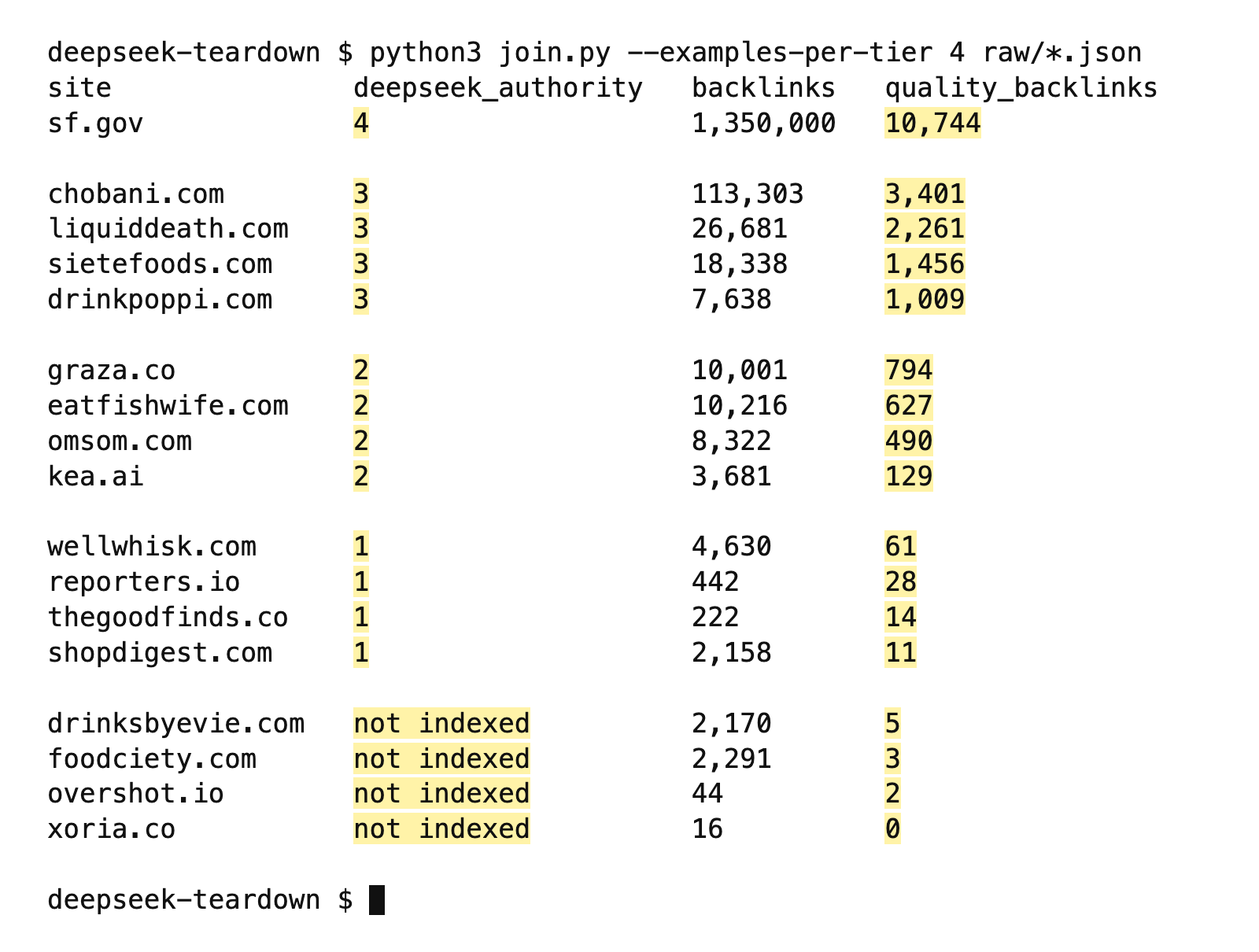
A managed service should define the query set, track results across relevant engines and markets, and inspect which sources appear alongside the brand. Depending on the category, useful work can include improving owned content, earning inclusion in credible independent sources, and participating in communities where buyers discuss products.
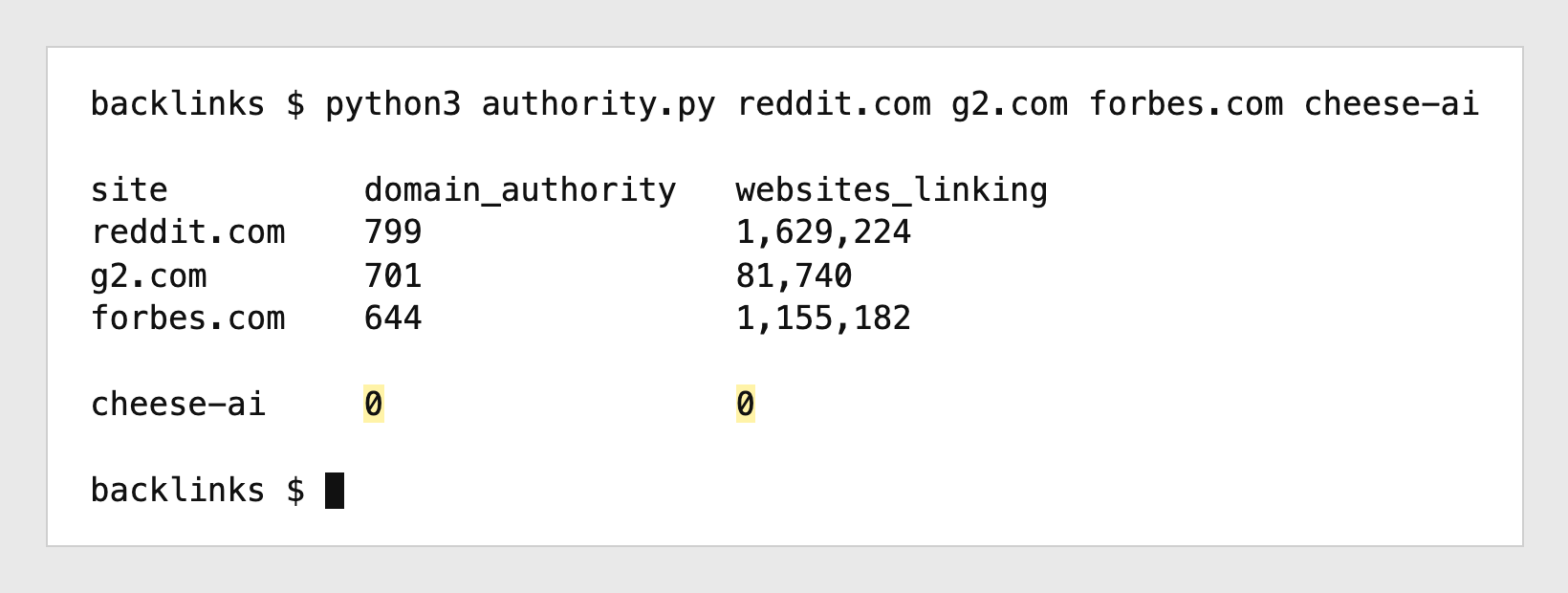
Reddit requires particular care. Its self-promotion guidance says promotion is generally frowned upon, contributors should understand each community's norms, and people must not be paid or compensated to promote something. A campaign built on bulk posts, disguised promotion, or paid commenters risks violating community expectations. Genuine, human-written contributions should be relevant to the subreddit and useful to its readers.
Google's position is also practical: websites don't need a special AI file, AI-specific markup, or a new schema.org type to appear in Google AI features. Standard SEO fundamentals still apply, and structured data should match visible page content, according to Google's guidance for AI features.
That means an AI visibility program shouldn't invent an AI-only technical layer. It should combine crawlable pages, clear content, accurate structured data, and a separate process for checking citations and mentions across answer engines. For more on the optimization side, see AI search optimization.
Frequently Asked Questions About Managed SEO
How long does a managed SEO service take to show results?
There isn't a reliable universal timeline. Timing depends on the site, competition, implementation speed, and type of work. Ask the provider what it will measure during onboarding and how it will distinguish early signs of progress from business outcomes.
Can a managed provider work with my existing marketing team?
Yes. Your team can own business priorities, product knowledge, approvals, and coordination with engineering, while the provider handles agreed SEO research and execution. Define responsibilities before work begins so the provider doesn't duplicate existing efforts or wait on unclear approvals.
Are managed Reddit campaigns compliant?
They can be, but only when they respect Reddit's rules and each community's norms. Reddit says self-promotion is generally frowned upon and prohibits offering money or compensation to people to promote something. Ask how a provider ensures contributions are genuine, relevant, and written for the community.
How can I measure ROI if AI traffic arrives through branded search?
Combine Search Console analysis with conversion data, branded-search monitoring, assisted-conversion reporting, and post-purchase surveys. Keep direct measurements distinct from inferred AI influence, and document the evidence behind any attribution claim.
What should I look for in a provider?
Look for a clear scope, transparent reporting, real implementation ownership, and a measurement plan that includes business outcomes. Ask to see how the provider handles AI visibility alongside conventional SEO, and how it reports uncertainty rather than overstating attribution.
OGTool combines managed SEO and AI visibility work through keyword campaigns, AEO-optimized content, and Reddit campaigns, with a live dashboard for rankings, citations, brand mentions, and revenue attribution. If you need execution as well as monitoring, visit OGTool to review how its managed service fits your goals.